 DocumentFlow Desk
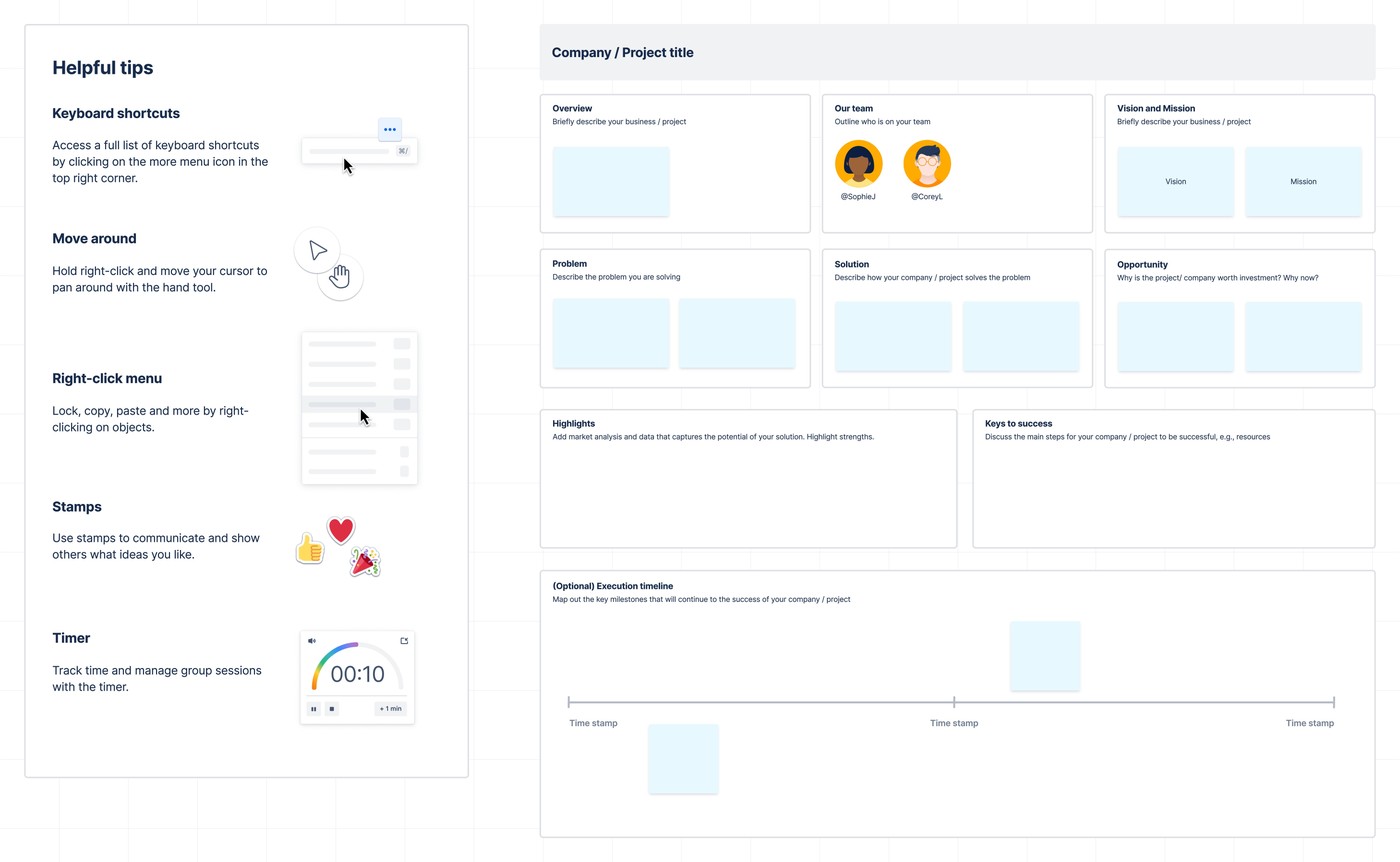
Identify the document and its central purpose
Atlassian describes an executive summary as a concise distillation of a larger report or proposal. Name the project or business and explain its main objective in language the intended stakeholders can understand. Provide enough background to establish the problem, opportunity or business need without reproducing the full document. An executive reader should be able to identify why the work matters and what kind of decision it supports. Keep the summary faithful to its source material, especially when the underlying document distinguishes a proposed initiative from completed work.
Select the approach, results and practical implications
Briefly explain how the work will be or was carried out, then highlight the findings, milestones or expected outcomes that matter most. Describe the potential business, financial or operational implications at an appropriate level of confidence. Do not turn an anticipated benefit into a verified result. The source's examples illustrate how a summary can connect a problem with a proposed solution, but their fictional organizations and projected launch dates should not become factual claims about a real business. Use the actual project's evidence and assumptions instead.
End with clear recommendations and review the wording
Explain the recommended action and the next steps the audience needs to consider. Avoid both vague promises and excessive operational detail. Technical terms that are obvious to the authors may be unfamiliar to the people approving the work, so use plain language and a readable structure. Check that the most important takeaway is easy to find and that the summary agrees with the full report. Review accuracy, missing context and unclear wording before sharing. A template can support consistency, but a useful executive summary still requires judgment about what this particular audience needs to know.
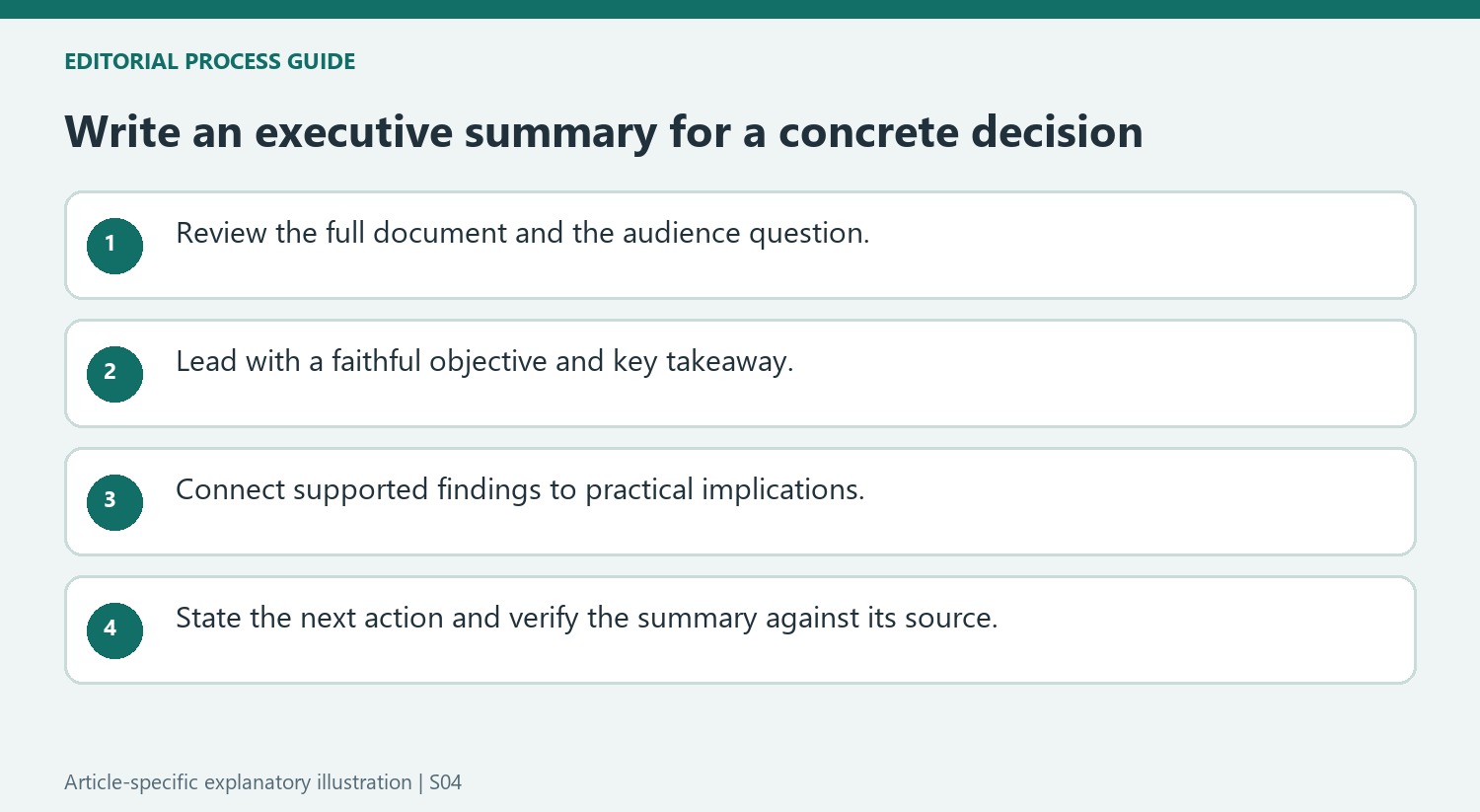
Read the source document before choosing the summary's emphasis
Identify the main objective, essential evidence and conclusion in the complete report or proposal. Then consider which decision-makers need the summary and what question they are being asked to resolve. Leading with the key takeaway helps a busy reader orient themselves, but the wording must preserve the full document's scope and level of confidence. A shorter version should not make a qualified conclusion appear certain.
Name the initiative and provide just enough background to explain the problem or opportunity. Define unfamiliar terms rather than relying on internal shorthand. If the summary may circulate independently, check that it still makes sense without the report immediately beside it. A clear standalone introduction reduces the risk that a reader applies an important finding to the wrong project, period or audience.
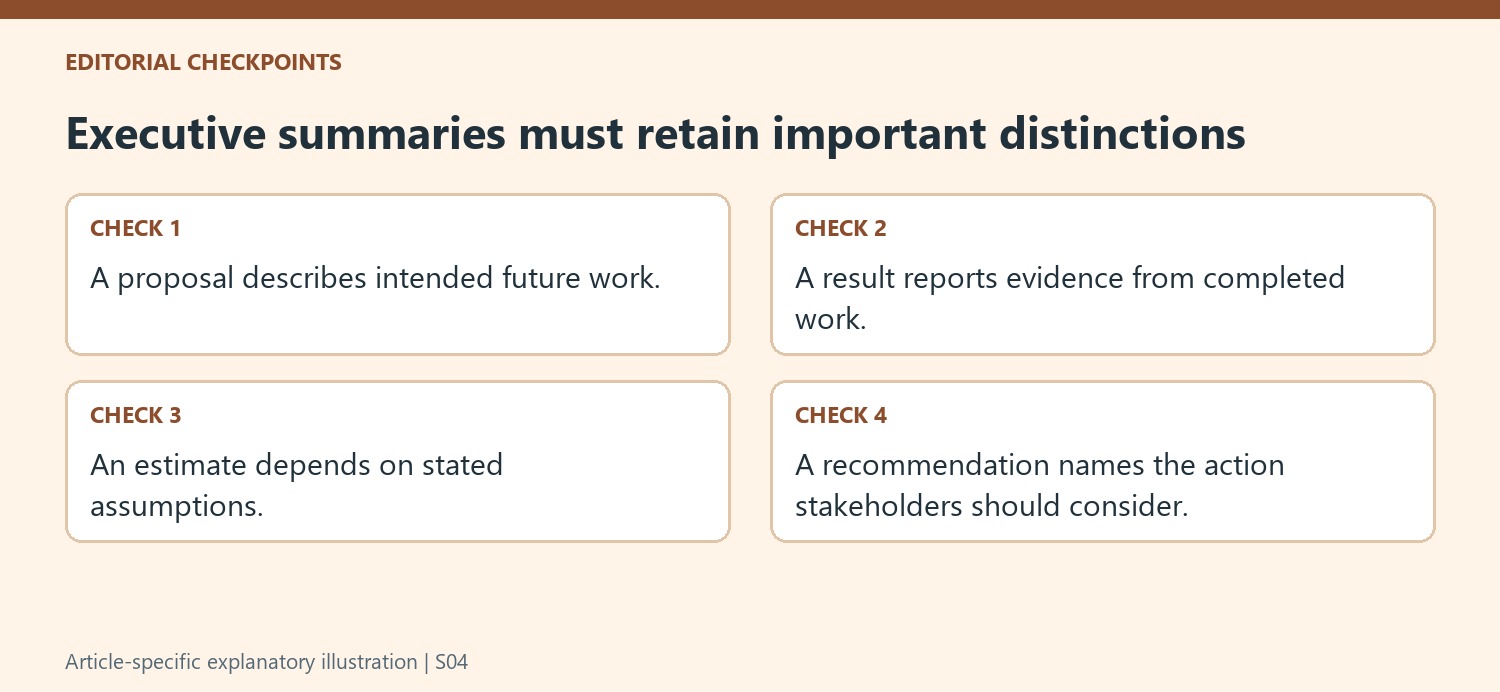
Explain significance without turning a forecast into a result
Select the findings or expected outcomes that matter to the decision and connect them to practical business implications. Figures for money, time or operational effects can help when they are supported by the underlying material. Preserve the assumptions behind estimates. A possible saving and a measured saving are different claims, even if both can be expressed with an impressive-looking number.
Summarize the approach briefly enough to explain why the evidence or proposal deserves consideration. Avoid copying a long methodology section into the overview, but do not omit a limitation that changes how results should be interpreted. The source's fictional project examples show a narrative pattern rather than real performance evidence. Use the actual initiative's data and status when adapting that pattern.
Make the requested next step specific and reviewable
End with the recommendation and identify the roles needed for the next action. Approval, further analysis and feedback are different requests; state which is needed and why. Use clear sections or brief lists where they help readers compare key points. Before sharing, invite an appropriate review for accuracy, coherence and missing context, then check agreement with the full report once more. A polished page is useful only if it gives stakeholders a reliable basis for the decision and a clear way to seek clarification where the evidence remains incomplete.
References
- Free Executive Summary Template | Confluence. Atlassian.



Comments
0