 DocumentFlow Desk
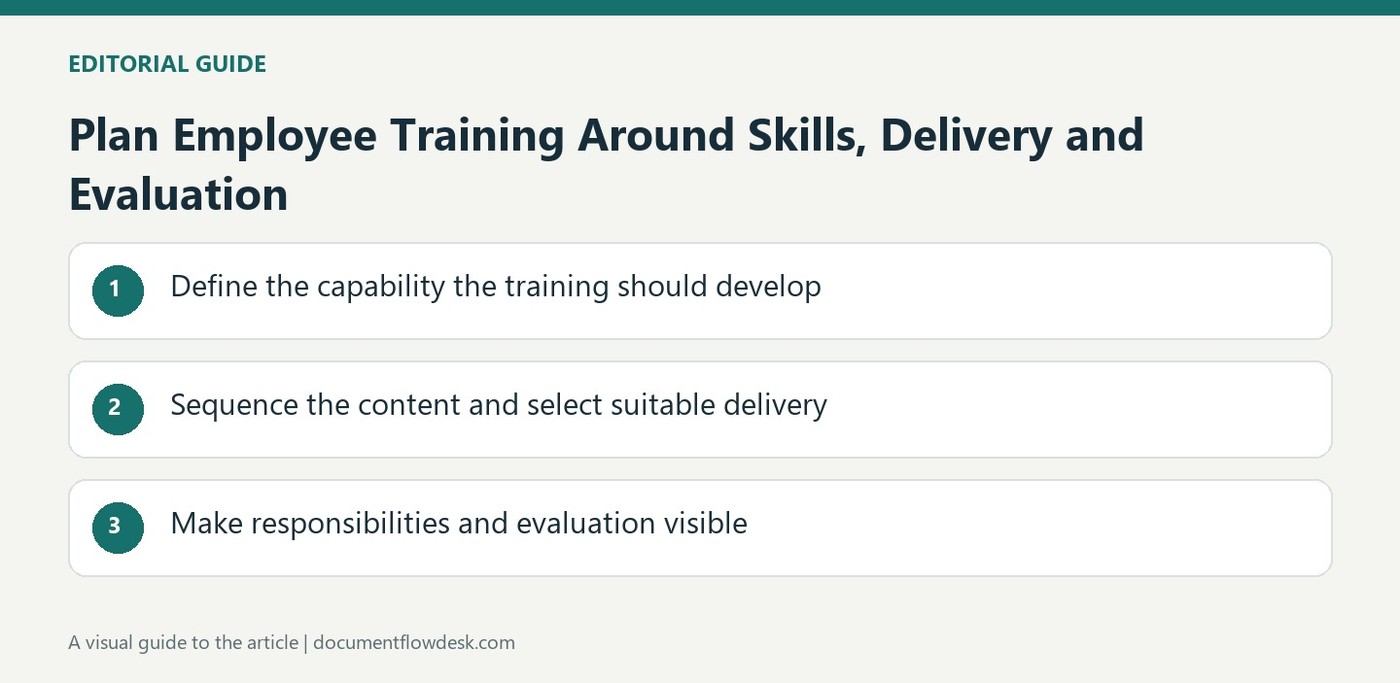
Define the capability the training should develop
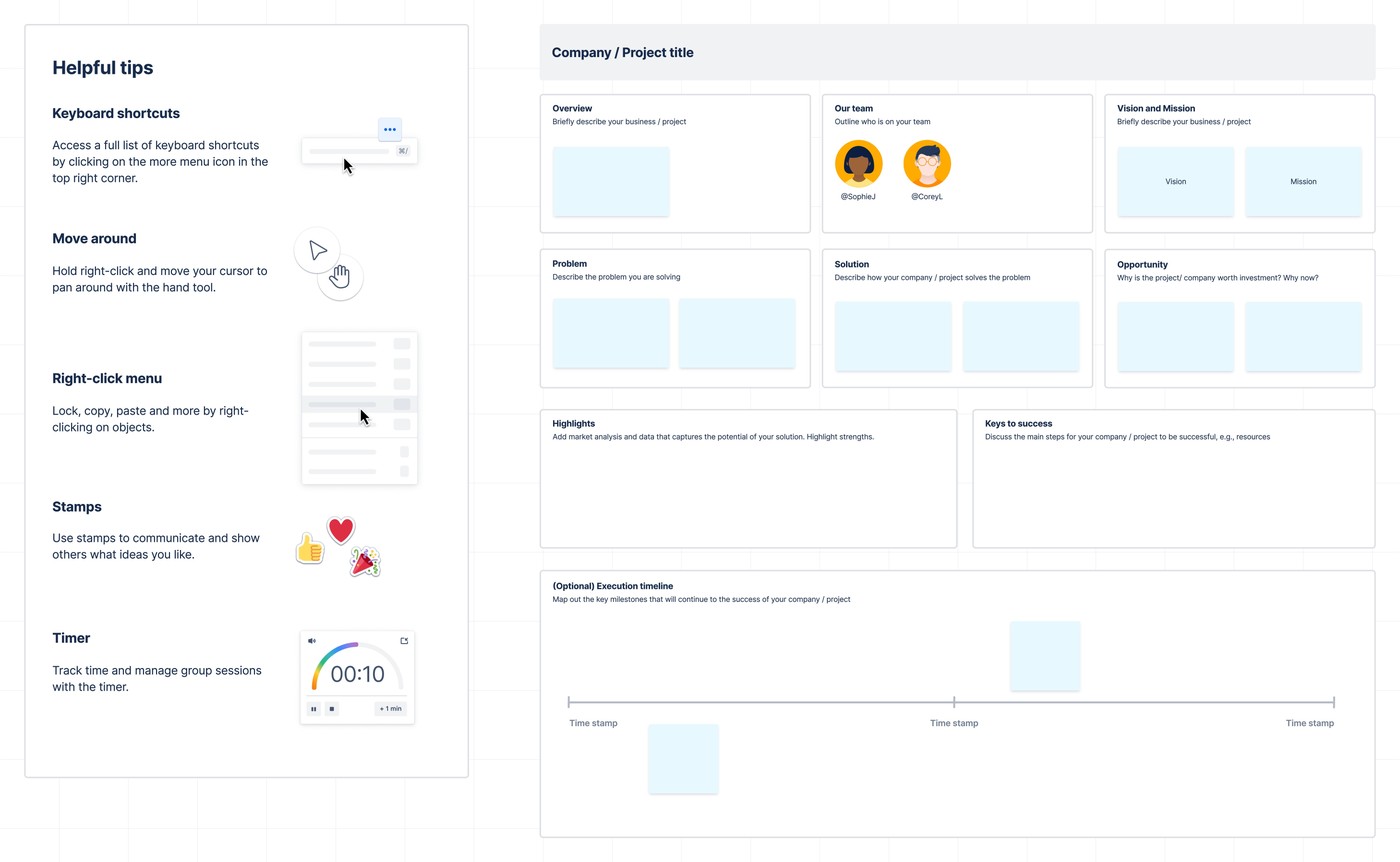
Atlassian describes a training plan as a structured account of the skills, knowledge and competencies employees need to develop. Begin with clear objectives connected to business needs rather than collecting sessions without a common purpose. The source recommends specific, measurable, achievable, relevant and time-bound goals. Assess the intended audience's current knowledge, roles and skill gaps before choosing the content. An onboarding plan, compliance program and leadership-development course need different emphases, even if they share a consistent planning structure and a common place to record progress.
Sequence the content and select suitable delivery
Outline the topics in an order that supports learning, with the main points, examples and resources for each module. Build a schedule that includes session dates, durations and milestones while respecting participants' existing responsibilities. Choose delivery methods to suit the material and audience: instructor-led workshops, self-paced learning, mentoring and on-the-job practice are among the options discussed. A blended program can combine methods where appropriate. The template should clarify these decisions rather than force every group to follow the same schedule or assume that a single session establishes proficiency.
Make responsibilities and evaluation visible
Identify what trainers and participants are expected to do and establish checkpoints for reviewing progress. Include evaluation methods that relate to the learning objectives so attendance alone is not mistaken for evidence that a skill has been developed. Reuse the framework to keep planning consistent, while customizing it for the actual audience and purpose. The source presents training as an ongoing development process, so review what the program achieved and what needs adjustment. A well-maintained plan supports that review by keeping the objectives, content, timing and responsibilities in one coherent structure.
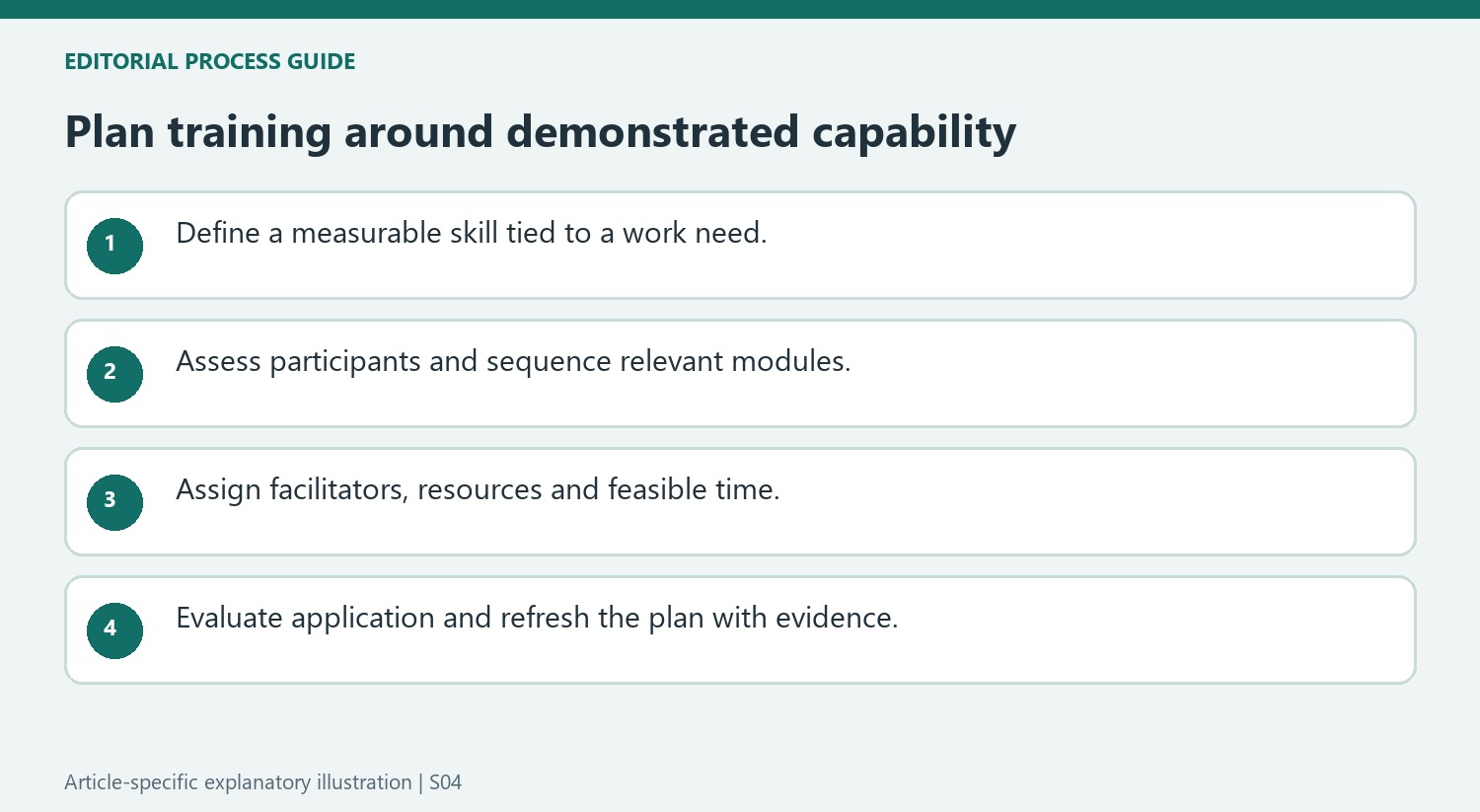
Connect the learning objective to an observable capability
Begin with the skill or knowledge participants need for their work and describe what successful learning would enable them to do. The source recommends measurable goals tied to organizational needs. A session title or a number of hours does not express that result. Clear objectives guide both the material selected and the assessment used later to judge whether the program achieved its purpose.
Assess current knowledge and responsibilities before choosing the starting level. New hires may need role and policy context, while experienced staff may need focused practice on a specific gap. Consider relevant preferences and accessibility needs without assuming that every participant learns in one fixed way. A consistent planning framework should make those audience differences visible instead of forcing identical content on every group.
Build a sequence with the resources needed for participation
Outline modules in a logical order, including key points, examples and practical activities. Match the delivery method to the capability being developed: a workshop, self-paced material, mentoring or supervised practice can serve different needs. Use a blend where it supports the objective. Active discussion or a realistic problem can reveal misunderstandings that passive attendance leaves hidden.
Record the facilitator, materials, technology and time needed for each part. Check the schedule against participants' other responsibilities and leave room for emerging questions or necessary adjustments. A program that lists every topic but provides no feasible participation time is not ready for implementation. Assign responsibility for preparation as well as delivery so essential resources are available when the learning activity begins.
Evaluate learning and refresh the plan using evidence
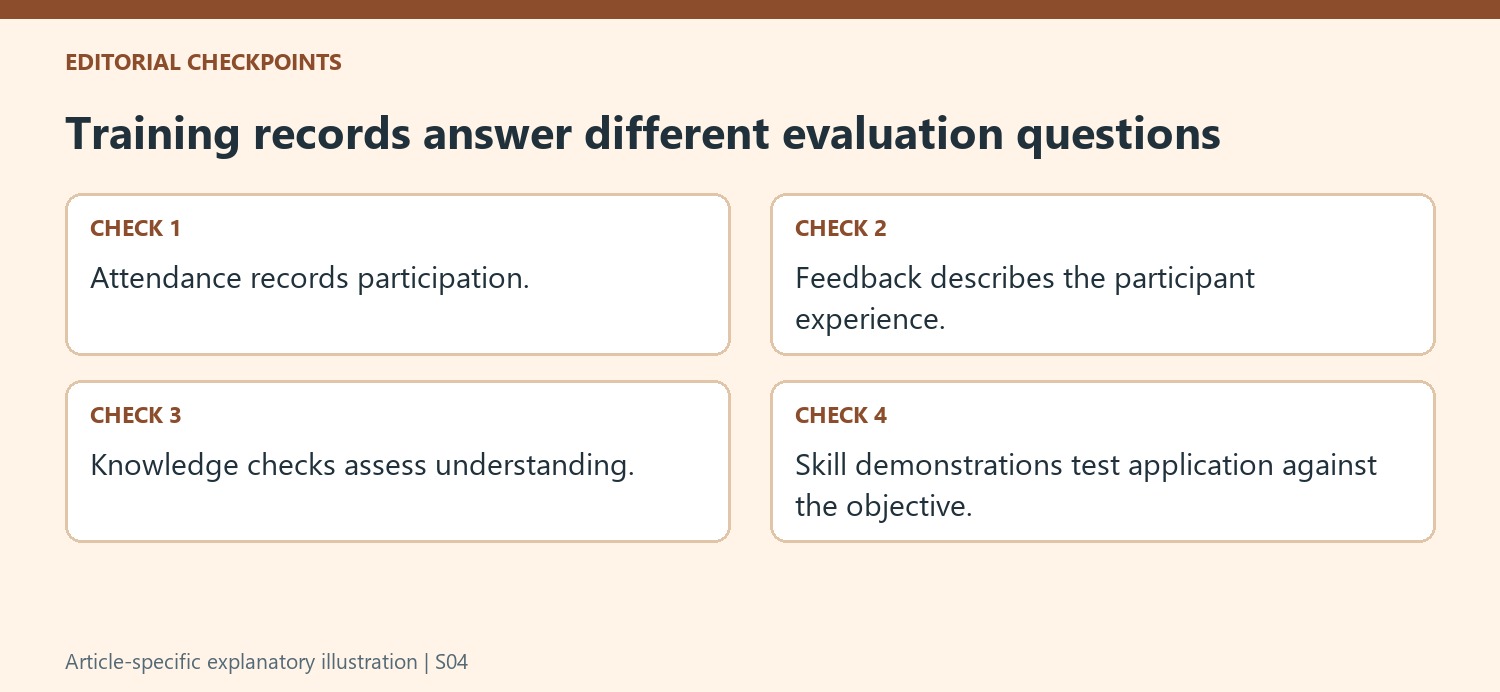
Choose knowledge checks, demonstrations, observations or other measures that connect to the original objective. Participant feedback can describe their experience, but it is different from evidence that a skill can be applied. Review both kinds of information when improving the plan. The source recommends periodic refreshes and cross-functional input; use those reviews to remove outdated content and address changed needs. Record what was adjusted, who owns the revision and why it was necessary so the next delivery builds on evidence rather than repeating the same program merely because its template is already complete.
References
- Free Training Plan Template | Confluence. Atlassian.




Comments
0