 DocumentFlow Desk

Establish the information before shortening it
Smartsheet's guidance recommends gathering the important planning information before producing the concise brief. The project manager works with the team and relevant stakeholders to understand the purpose, scope and intended results. Start with the project name and identify the manager, team members and key stakeholders or clients. Explain the value of the work in ordinary language. Condensing agreed information helps the brief provide a reliable entry point to the project, rather than becoming an attractive summary that disagrees with the plan people are actually following.
Select the details a reader needs first
Include the goals, principal deliverables and expected outcomes, together with start and end dates or important milestones. Add background, a budget, success measures or audience information when these details are necessary to understand the work. The source describes a brief that can range from a paragraph to a page, so prioritize meaningful information instead of using length as the main quality measure. Distinguish a deliverable the team will produce from the business result it hopes to achieve, and make unresolved assumptions visible to the appropriate reviewers.
Maintain links between the overview and the plan
Use links to connect the brief with a detailed schedule, project plan, dashboard or communication process. This keeps the overview readable while allowing readers to investigate operational questions. Review the brief when the project changes so its description of the goals and timing remains current. A completed project brief can also inform a later case study, but any account of results should reflect what actually happened. Do not convert an intended outcome into a claimed achievement simply by changing the tense when the project closes.
Resolve the planning questions before compressing the answer
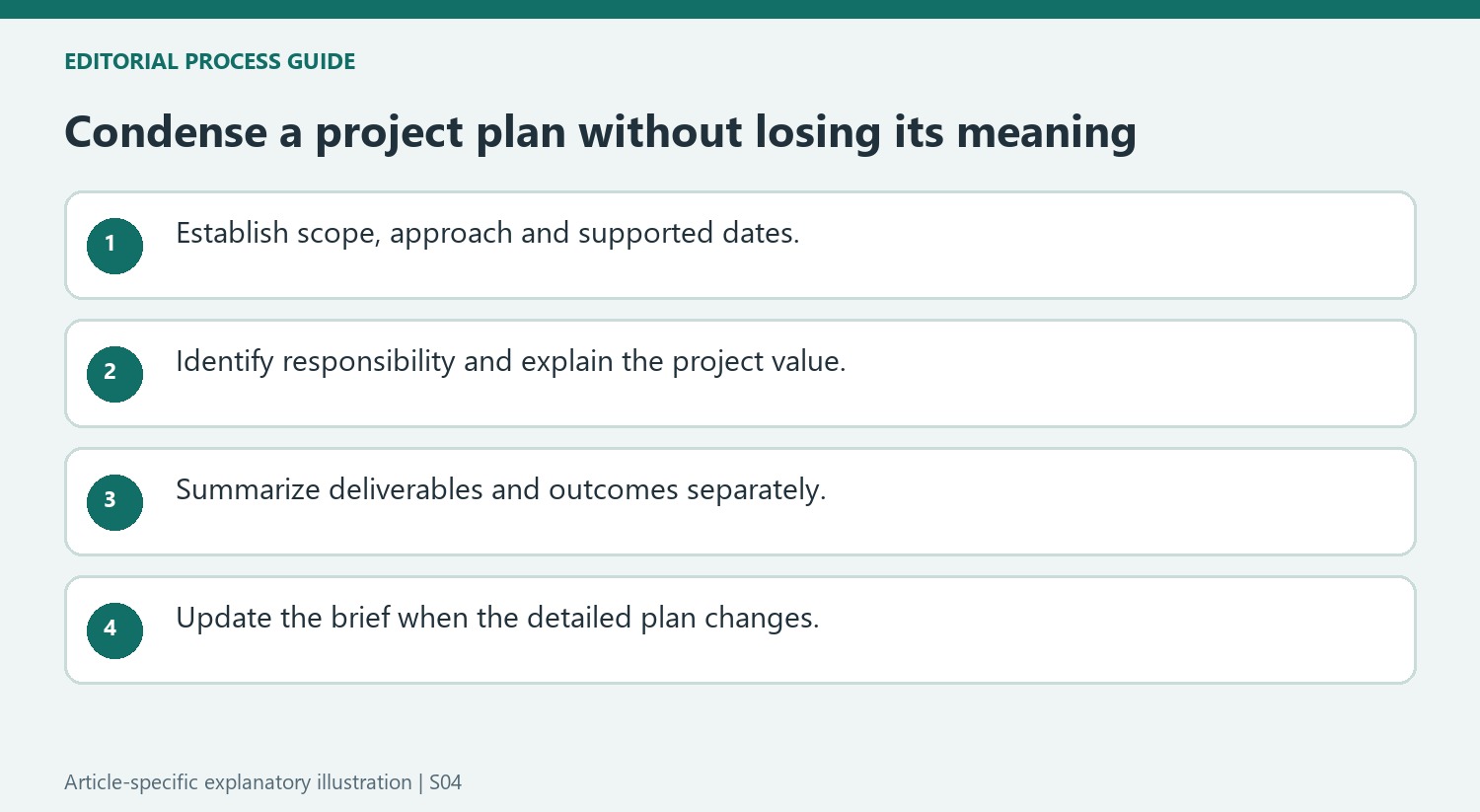
The source recommends preparing the brief from established project details. Work with the team to clarify what the project should accomplish, how the team intends to approach it and which dates are supported by the plan. When information has not been agreed, record that status instead of supplying a confident sentence merely to complete the overview. Concision should not hide uncertainty that materially affects a stakeholder's decision.
Identify the project manager and relevant participants so readers know where responsibility sits. Then describe the value of the work without assuming familiarity with internal terminology. Background may need only a sentence or two, but it should explain enough for an occasional reader to understand why the initiative exists. This is particularly useful when the brief will be reused in a kickoff presentation.
Select supporting detail according to the reader's purpose
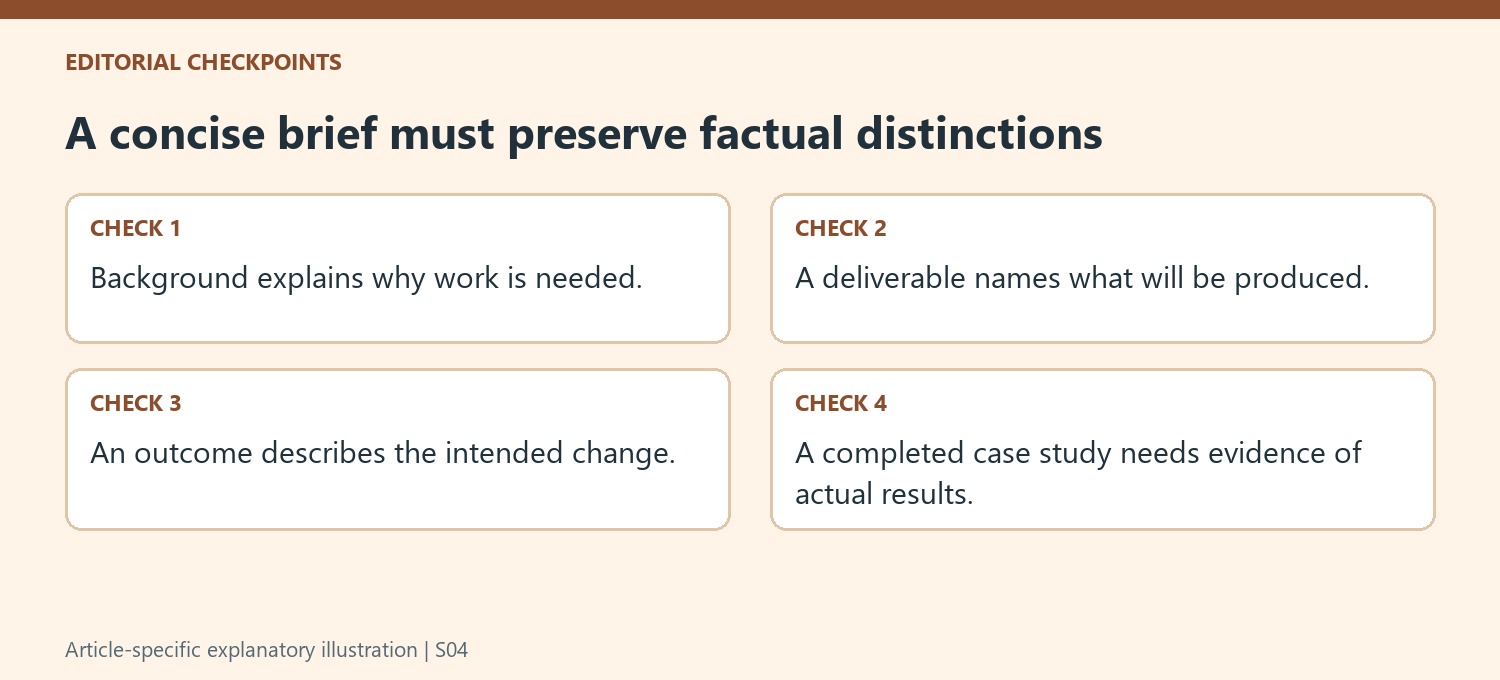
An internal stakeholder may need key dates and resource implications, while a prospective audience for a completed case study needs accurate results and context. Adjust emphasis without changing the underlying facts. Do not describe an expected benefit as already achieved. If a budget or success measure is included, make sure it refers to the same scope and time period as the rest of the overview.
Use clear section labels to separate the goal, deliverables and timeframe. A deliverable is something the team will produce; a desired outcome explains what that work is meant to change. Keeping those statements separate helps a reader assess whether producing the planned output is sufficient to meet the wider need. Links can supply the operational detail without forcing every task and dependency into the brief itself.
Maintain agreement between the short and detailed records
After a scope or schedule change, compare the brief with the revised plan and update its summary accordingly. Check references to dashboards, schedules and communications documents so readers reach the current material. A short overview can save repeated clarification only when it remains trustworthy. Keep enough identifying context to distinguish it from earlier versions, and review any later reuse in marketing or lessons-learned material. The finished project's actual evidence should determine the claims made about its results, rather than the optimism of its original proposal.
References
- Project Briefs | Smartsheet. Smartsheet; Kate Eby.



Comments
0