 DocumentFlow Desk

Start with the reason for the project
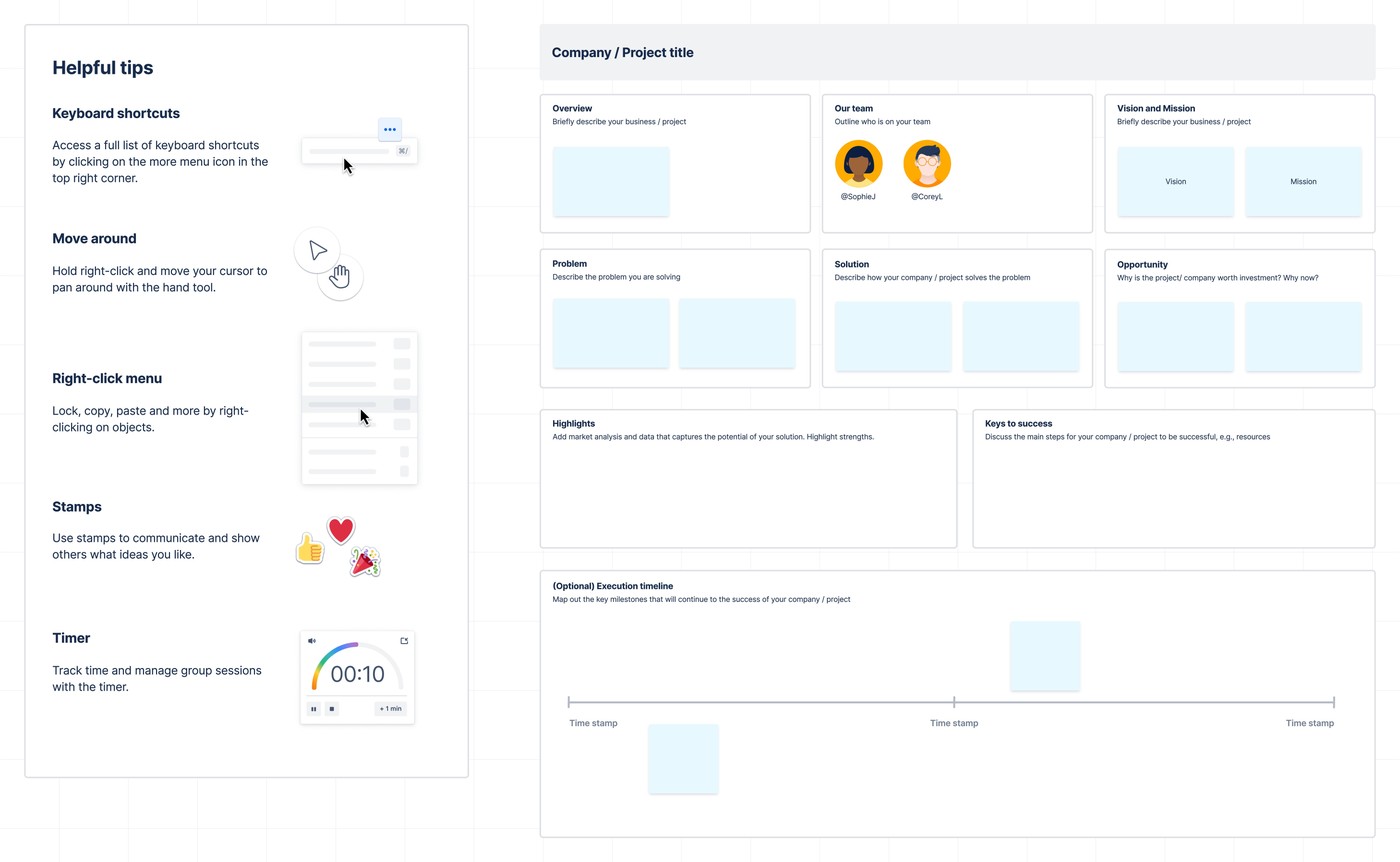
Asana describes a project brief as a compact explanation of the work, its goals, its intended audience and its timeline. Begin with the problem or opportunity that makes the project necessary. Explain the background in terms that colleagues outside the immediate team can understand, then connect the desired outcome to broader organizational objectives. Length should follow the complexity of the work: a brief may fit in a paragraph or need a page. Keep essential context visible instead of making readers search through a full planning document before they can understand the proposal.
Define the boundaries and the people served
Describe what the project is expected to accomplish and who will benefit from its outcome. State the scope clearly enough that collaborators can recognize requests that would expand it. Include the major milestones and the expected timing, with links to supporting schedules when needed. A brief supports early alignment across functions, but it should evolve as the project becomes clearer. Treat open questions as open questions rather than presenting uncertain dates or assumptions as commitments that the team has already agreed to deliver.
Keep the brief distinct from related documents
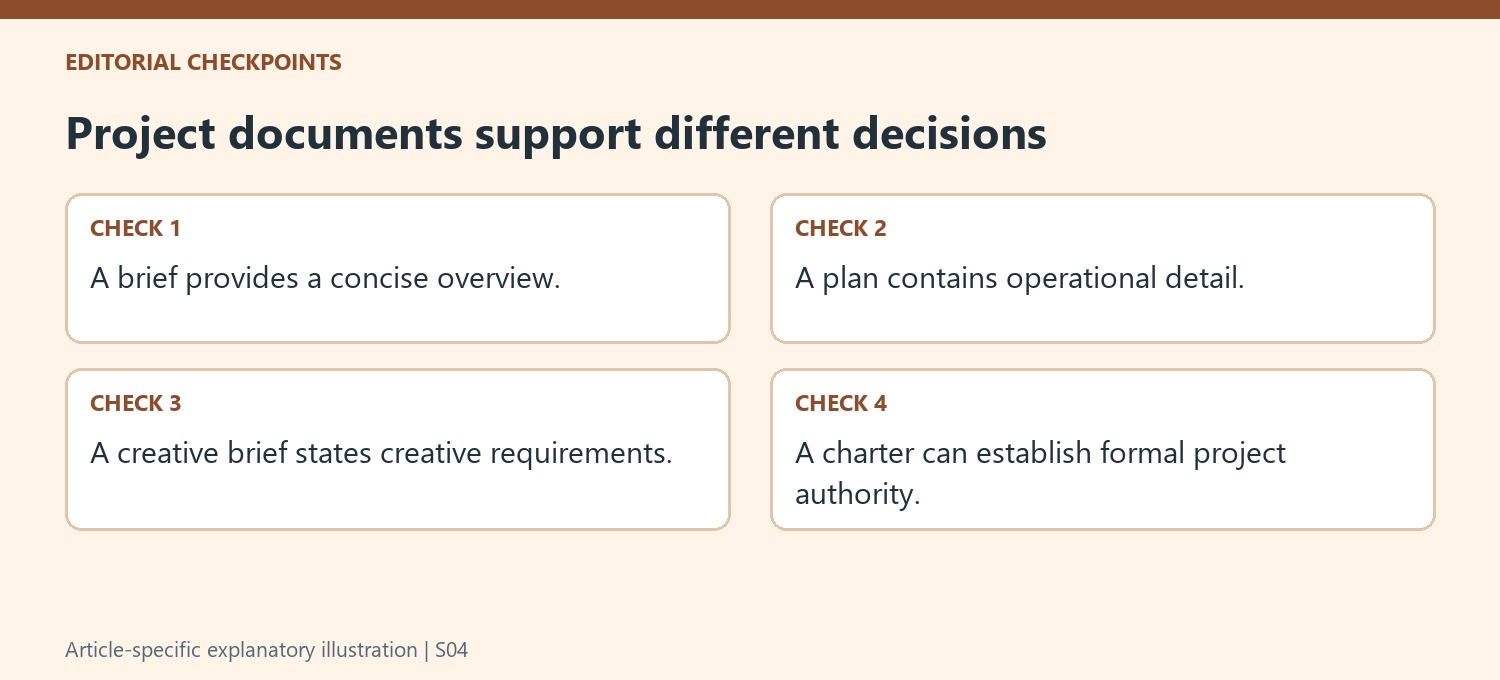
A project plan carries more operational detail, including responsibilities, budgets, communications and measures of success. A creative brief focuses on creative requirements such as messaging or tone. A charter can formally authorize a project and establish the project manager's authority. The short overview does not automatically perform all of these functions. Use clear labels and links to help readers move from the brief to the appropriate detail, and update the overview when material decisions change so it continues to represent the project accurately.
Supply context that crosses departmental boundaries
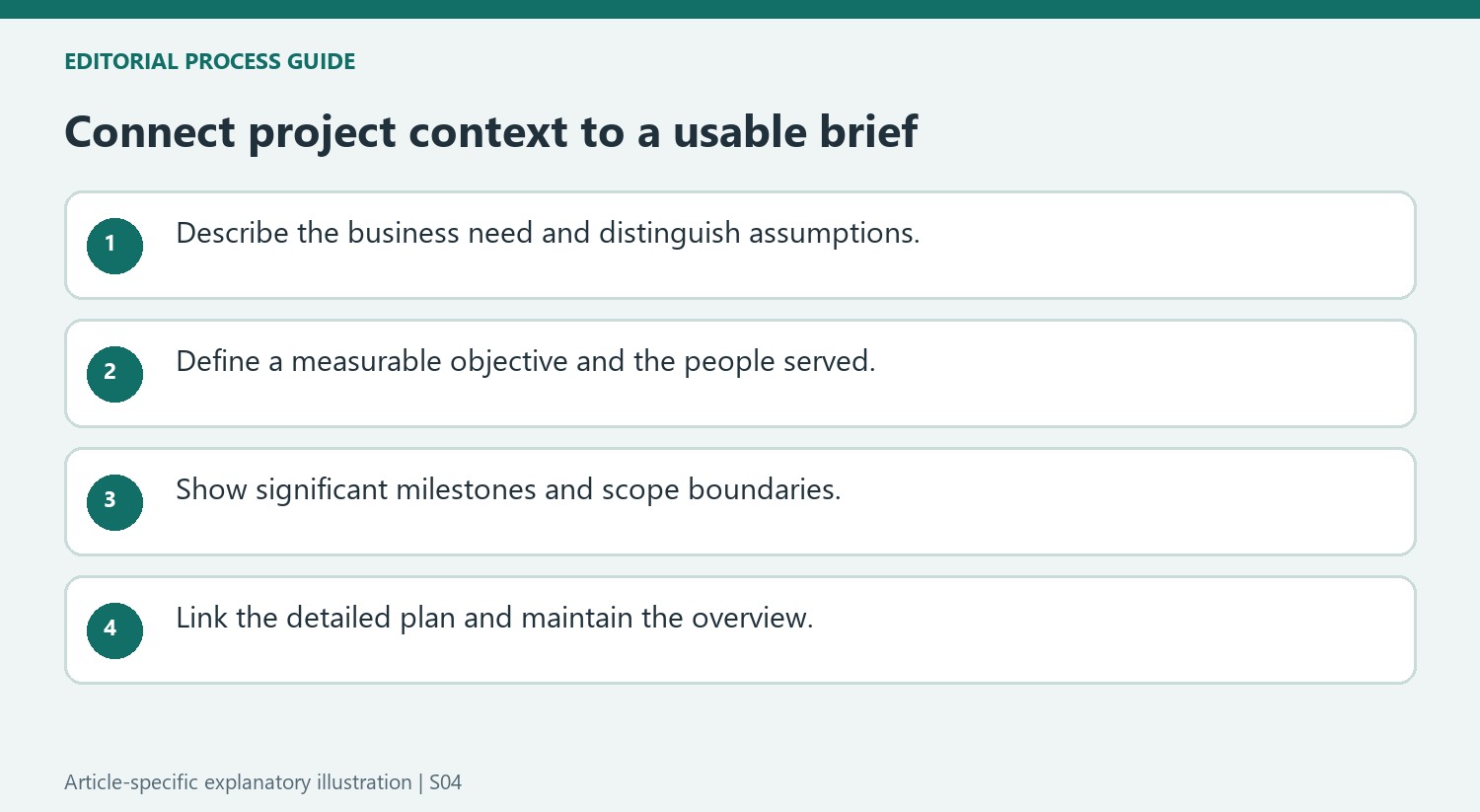
A colleague outside the immediate team may understand the proposed output without understanding why it matters now. Describe the customer feedback, business need or earlier work that prompted the initiative. Separate observations from assumptions, and explain what the team hopes to change. This background gives later readers a basis for interpreting the objective rather than leaving them to infer the project's value from its name.
The source uses a product-feature campaign to show how background, audience and objectives connect. Its example figures illustrate a hypothetical project, so they should not become evidence for another organization's decisions. Use verified information from the actual initiative and label estimates honestly. An early brief can be useful while questions remain open, provided its uncertainty is visible and its claims are reviewed as planning develops.
Connect the objective to milestones that readers can interpret
State the intended result in terms that allow the team to recognize progress. A broad aspiration such as improve adoption needs a defined audience, measure and time window before it can guide evaluation. Include the most important dates and intermediate milestones, not only a final launch day. This makes dependencies visible when one team's output must be ready before another can proceed.
Keep the audience description concrete enough to inform decisions about the work. Relevant needs and constraints are more useful than a demographic label alone. Then compare the proposed deliverables with that audience and the stated objective. If a new request adds work without serving either, flag it for a scope decision rather than quietly absorbing it into an already agreed schedule or description.
Use the brief as a maintained route into the project
Place clearly labeled and accessible links to the detailed plan, responsibility chart or communications process where readers can find them. Identify the person responsible for keeping the overview current and review it after material changes to scope or timing. A short brief can support a kickoff conversation or a quick stakeholder update, but formal authorization and operational planning may require separate documents. Keep the relationship between those records clear so a reader knows where to find the approved authority, the current schedule and the reasoning behind the work.
References
- Project Drief: Definition, Template, Examples + Steps [2026] • Asana. Asana; Julia Martins.



Comments
0