 DocumentFlow Desk
Prepare topics together before the conversation
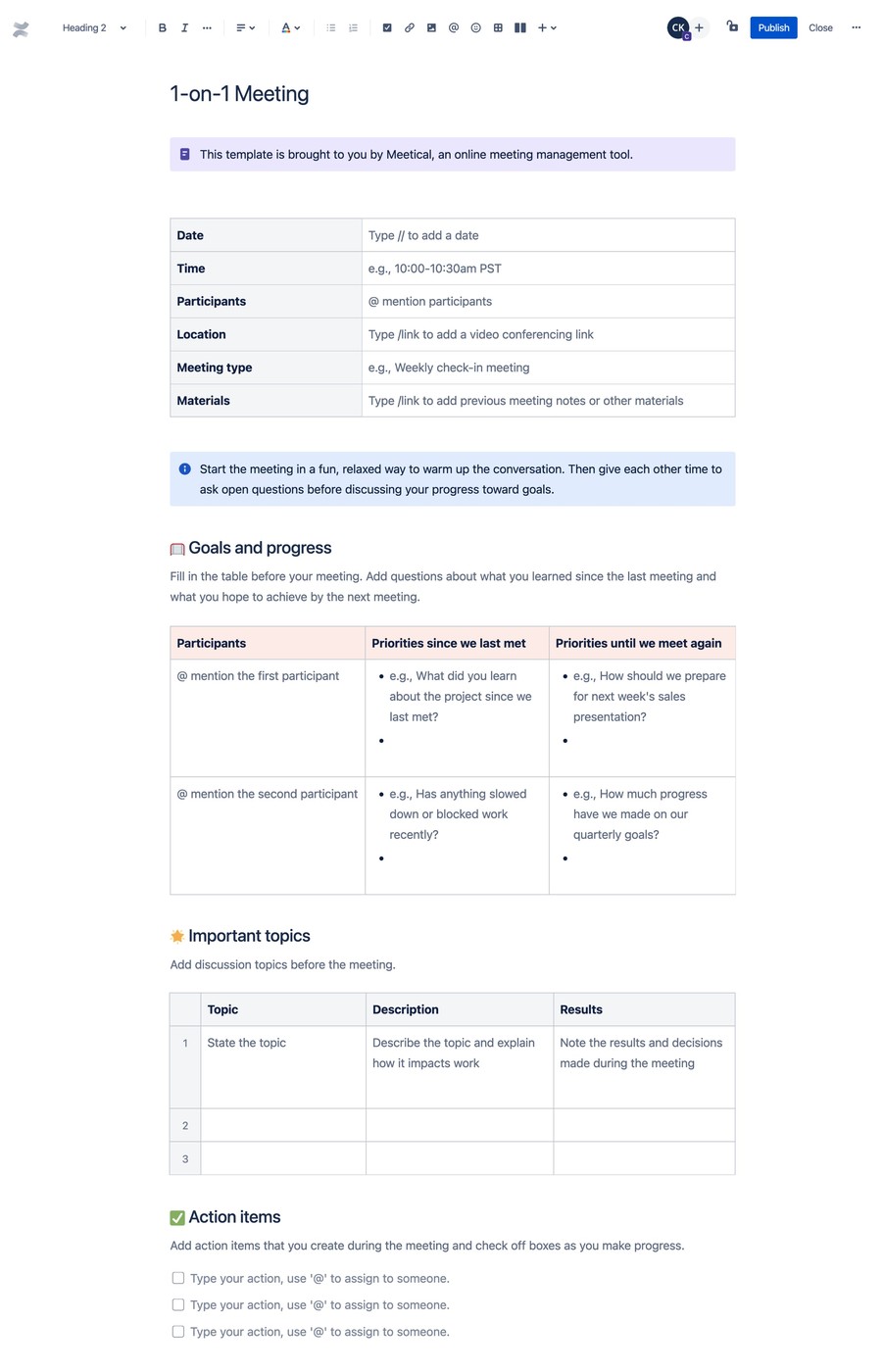
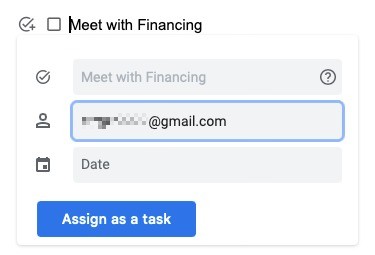
The source describes one-on-one meetings as a focused conversation between two people, often a manager and direct report. Add the meeting details and share the agenda with the other participant through the appropriate access settings. Both people should contribute questions and priorities rather than treating the session as a one-sided status request. Review previous notes before adding new topics. This helps separate unresolved commitments from fresh concerns and leaves more time for the discussion itself, especially when urgent work would otherwise crowd out feedback or development goals.
Use the agenda to support a two-way discussion
Balance immediate blockers with progress, expectations and longer-term growth. A consistent template can prompt these areas without turning the meeting into a rigid questionnaire. Record concrete context where it will help future follow-up, and keep tentative ideas distinct from agreed goals. The source encourages comments and action items during the session, but the notes should not interrupt the conversation unnecessarily. Check the interpretation of important feedback together so the written record reflects a shared understanding rather than a shorthand phrase that becomes ambiguous after the meeting.
Follow up with clear ownership and appropriate access
After the conversation, review the actions and update their status as work progresses. Identify who is responsible and what outcome is expected, carrying unresolved items into preparation for the next meeting. Keep the record in a location whose permissions fit the nature of the conversation, since individual feedback may require a narrower audience than ordinary team notes. Create a fresh session record when appropriate while preserving useful continuity. The template supports the relationship only when its notes remain relevant, understandable and connected to the commitments the two participants actually made.
Prepare together without turning the meeting into a rigid script
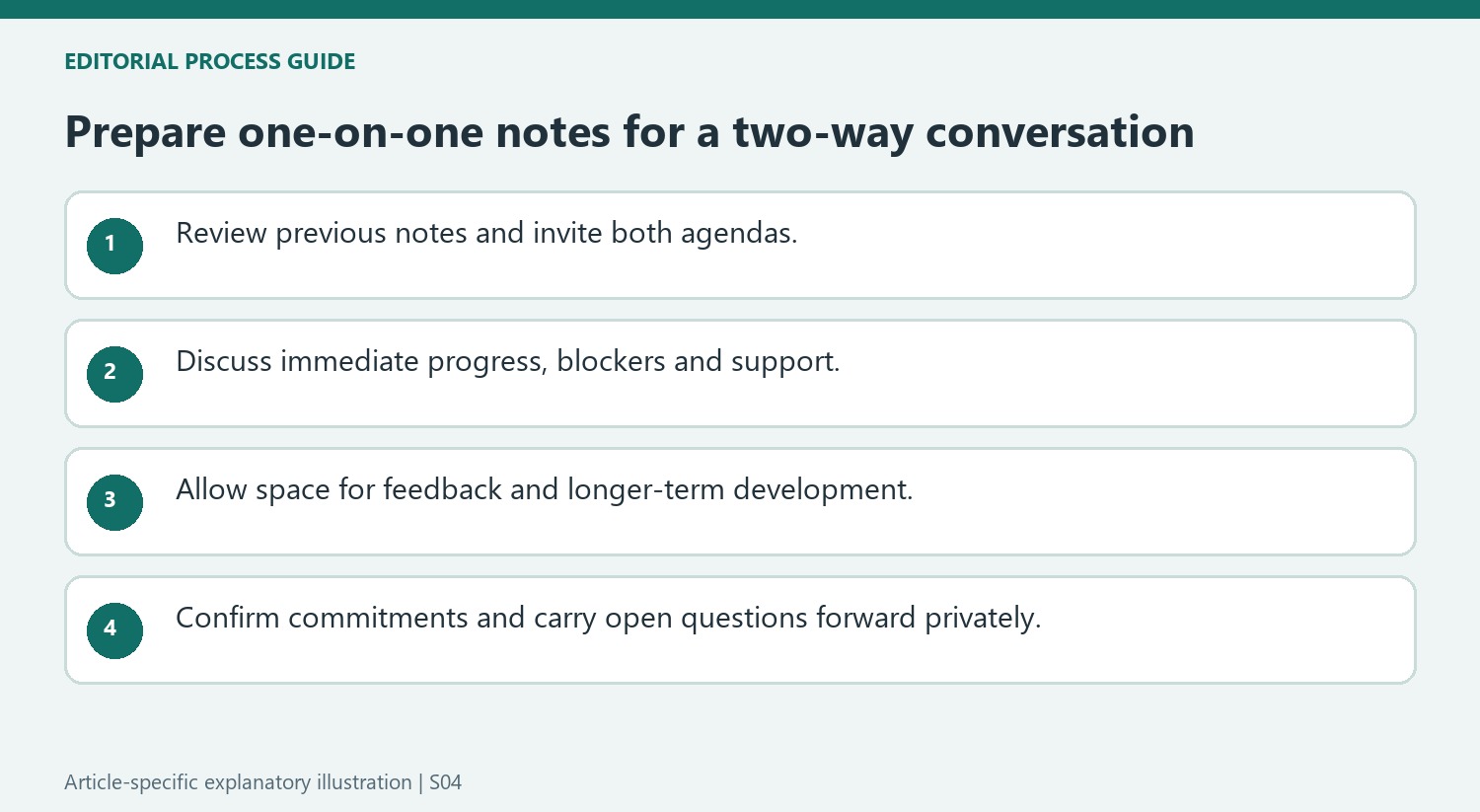
Both participants should have an opportunity to add questions before the conversation. Review previous notes and reflect on progress, concerns and the purpose of the next session. A shared agenda can reduce surprises, while appropriate access controls preserve the private nature of the discussion. Include the actual date so notes from one conversation are not confused with an older record.
For an initial one-on-one, allow time to learn about responsibilities, working preferences and career expectations. Later meetings can build on that understanding without assuming it never changes. The source recommends balancing immediate issues with longer-term goals. A useful agenda makes space for both, rather than letting urgent project updates consume every opportunity for feedback, support or development.
Use the conversation to clarify meaning as well as status
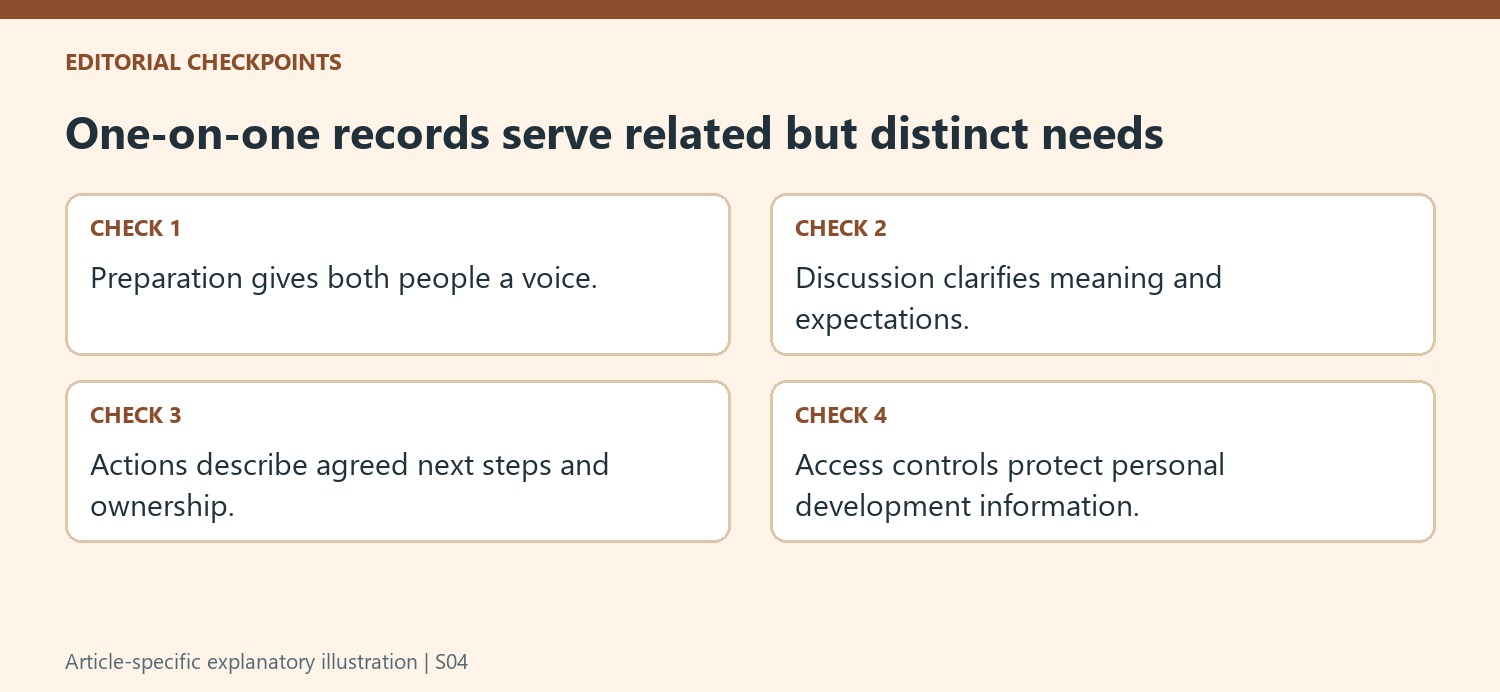
Ask about progress and blockers in a way that invites explanation. An incomplete task may reflect a dependency, competing priorities or unclear expectations, and each calls for a different response. Record the support or decision required rather than only noting that the work is late. Keep the distinction between an observation, a concern and an agreed next step visible in the notes.
Development and feedback discussions need room for both perspectives. Check that the notes express the intended meaning before turning a sensitive comment into a lasting record. Avoid using a prepared question list as a requirement to interrupt a useful discussion. Capture enough detail to support follow-through while keeping the session focused on a constructive exchange rather than on filling every field in a template.
Carry agreed actions forward with appropriate privacy
After the meeting, review comments and action items together where clarification is needed. Give each commitment a clear owner and describe the expected next step. Mark completed actions accurately after checking their outcome with the responsible participant, and carry open questions to the next dated meeting without presenting old assumptions as new agreements. Recheck sharing permissions when notes contain personal or developmental information. A sequence of focused records can show how support and goals evolve, while preserving a clear boundary between this private discussion and the wider project documentation that the team may need to access.
References
- 1 on 1 Meeting Template and Agenda | Confluence. Atlassian.



Comments
0