 DocumentFlow Desk
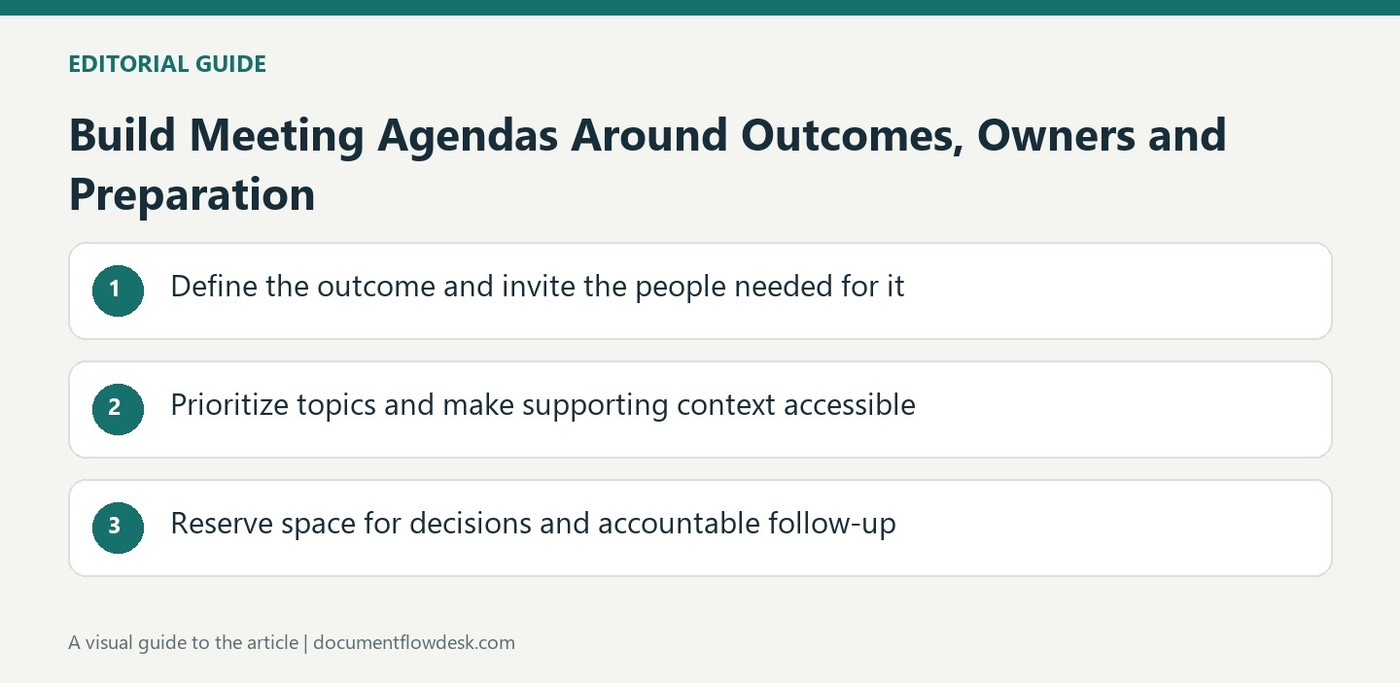
Define the outcome and invite the people needed for it
Atlassian's guidance starts with meeting details and an explicit objective. State the date, time, location or virtual link, then describe what the session should achieve. Identify participants by their relevant roles rather than adding everyone by default. A discussion that needs a decision should include the people authorized to make or inform it. Keep the objective specific enough to guide preparation and to assess afterward whether the meeting accomplished its purpose. A filled template is not evidence of an effective agenda if its intended outcome remains vague.
Prioritize topics and make supporting context accessible
Break the agenda into concrete items with a leader and a realistic time allocation. Put important decisions early enough that they are not displaced by routine updates. Link relevant documents or data in advance and check that participants can access them. Avoid overwhelming the agenda with unrelated background. The source recommends considering meeting type and leaving room for discussion, so treat time boxes as planning aids rather than a reason to rush an unresolved issue into an artificial agreement. Record what must be deferred when the available time is insufficient.
Reserve space for decisions and accountable follow-up
The agenda should support the meeting record by providing a place for confirmed outcomes and action items. For each action, capture the required work, an owner and a due date. Distinguish a proposed next step from one the group actually accepted. Review the list before closing so participants leave with a shared understanding. Afterward, distribute or store the agenda and notes through the agreed workflow. A repeatable structure saves effort when it consistently connects preparation, discussion and follow-through, while remaining flexible enough for different types of meetings and changes in priority.
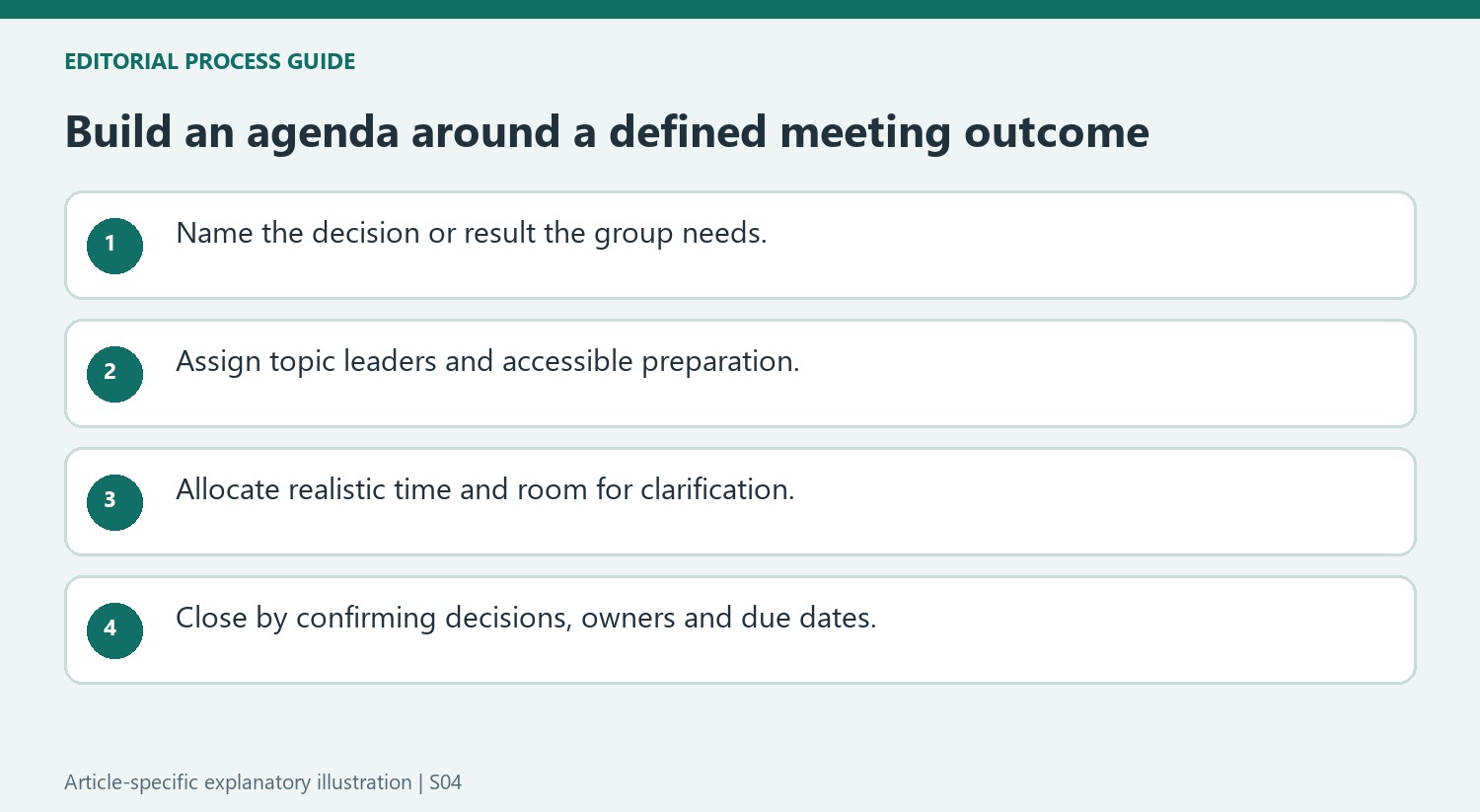
Translate a broad meeting purpose into an observable outcome
An agenda should explain what the participants are trying to achieve with their time together. A topic such as project update can cover anything from information sharing to a budget decision. State the intended outcome more precisely, then choose the discussion and preparation needed to reach it. Participants can prepare better when they know whether they are being asked to review, recommend or decide.
The source recommends identifying the meeting type before building the agenda. A planning session, a one-on-one and an all-hands gathering need different participation and timing. Include the meeting details and relevant roles so attendees understand who will introduce a topic and who holds the necessary responsibility. An invitation alone should not be expected to explain those distinctions.
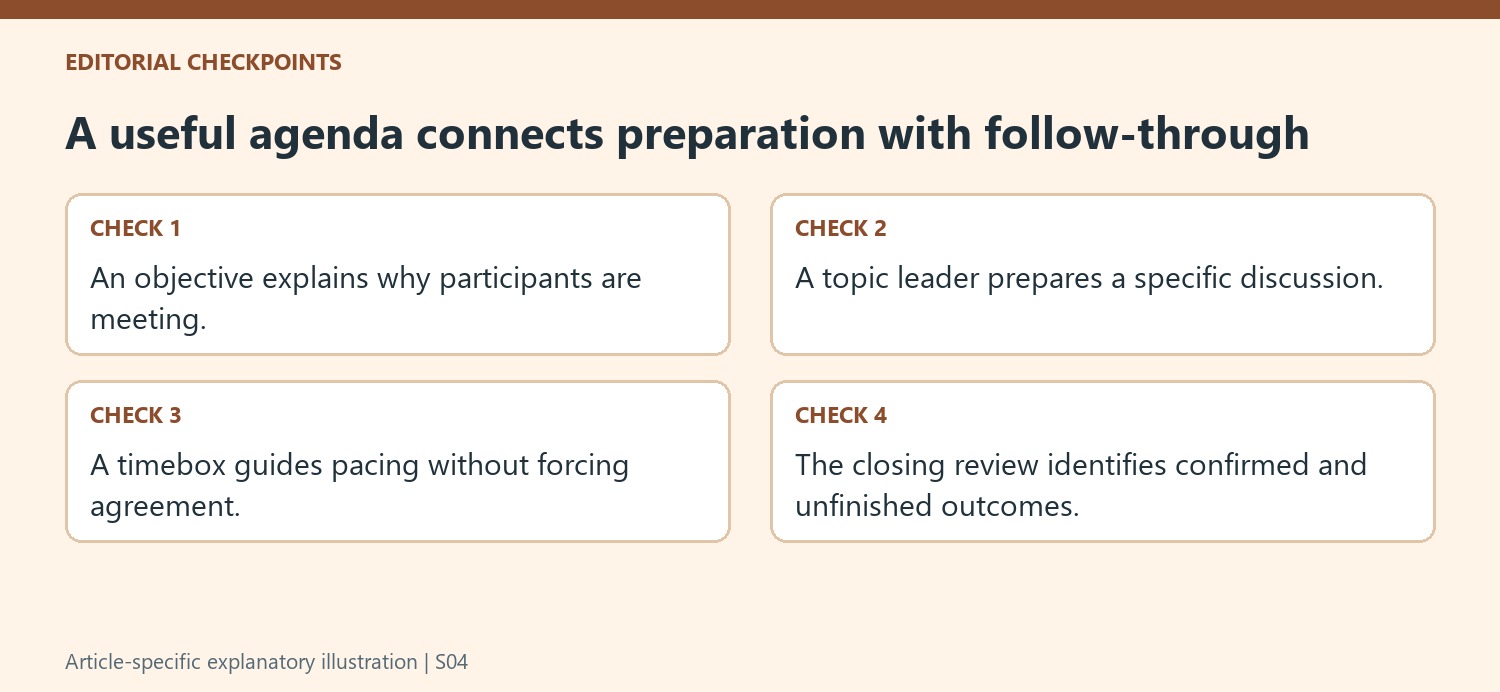
Allocate preparation and time according to the actual topic
Attach current supporting documents and confirm that participants can open them before the meeting. Explain what to review or bring rather than linking a long folder without direction. A topic leader can identify the specific question and background needed for the discussion. Make that responsibility explicit so useful preparation does not become an assumption shared by everyone and owned by nobody.
Estimate time according to complexity and priority, leaving room for clarification and a closing review. A timebox helps the group notice when discussion is expanding, but it does not justify forcing agreement on an unresolved issue. If the necessary evidence is missing, record the gap and decide whether to defer the topic or arrange a focused follow-up. Keep unrelated issues in a visible parking place.
Design the closing review into the agenda
Reserve space for decisions and actions as well as discussion headings. Before participants leave, distinguish confirmed outcomes from suggestions, state each deliverable and owner, and verify the agreed due date. Compare those results with the original objective to identify what remains unfinished. Share the agenda early enough for input, then retain the completed record with the relevant project materials. This connects preparation, discussion and follow-through, helping the next meeting begin with a clear view of what was actually agreed rather than a repeated list of broad topics.
References
- Free Meeting Agenda Template | Atlassian. Atlassian.



Comments
0