 DocumentFlow Desk
Explain the purpose of each recurring session
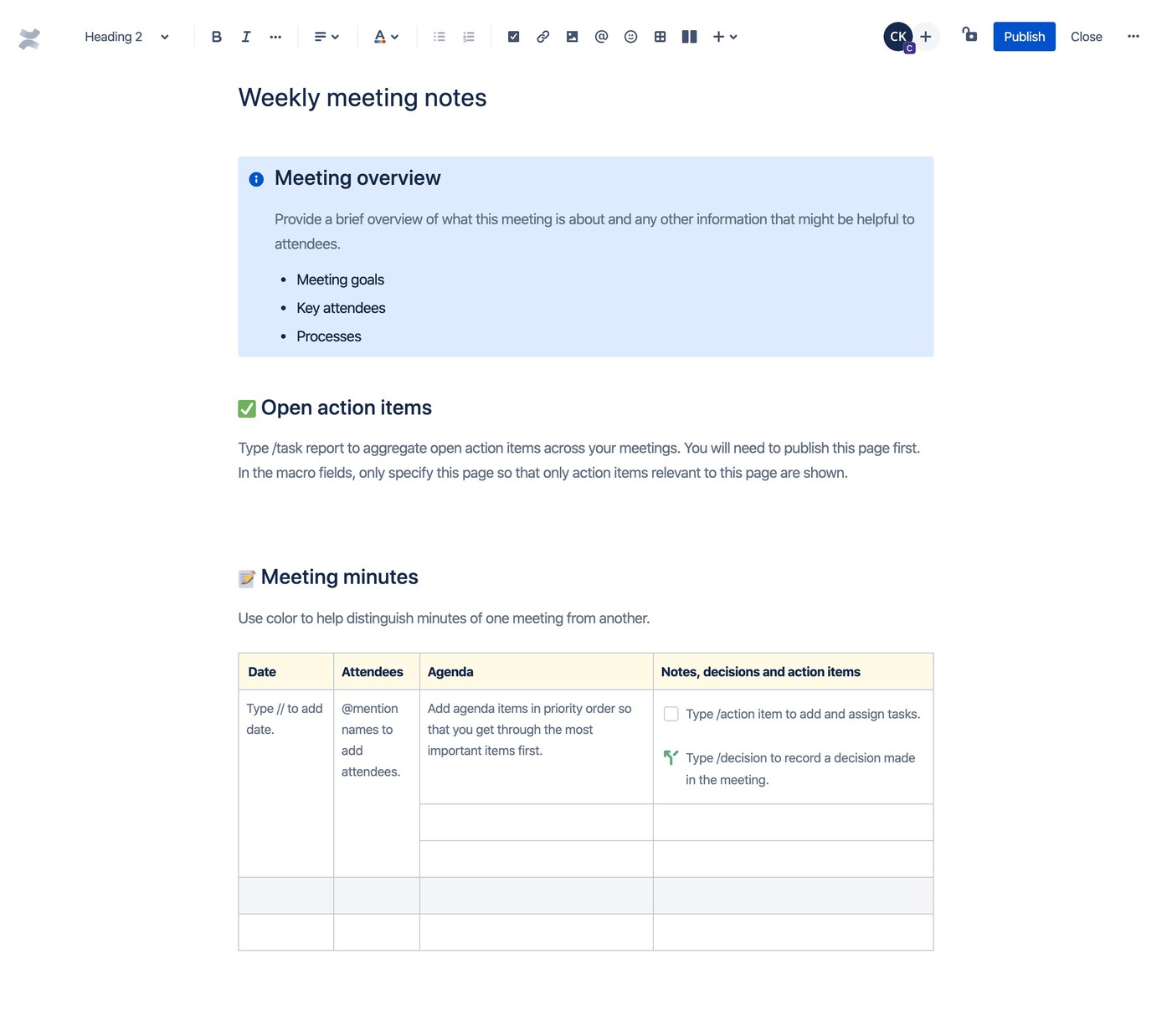
The source recommends recording the meeting's goal, key attendees and working process in an overview. A repeated calendar event still needs a clear reason for gathering. Update the overview when the purpose changes rather than carrying an outdated description into every new note. Ask participants for agenda items before the meeting and prioritize the topics that need discussion or a decision. This gives the record a useful structure and helps a later reader understand why a particular issue was raised on that date rather than in another session.
Review open work across previous meeting records
The Confluence template describes using a task-report macro to collect unchecked action items from earlier meetings. Check the relevant scope and the meaning of an unchecked task in the actual workspace. A combined list can reveal unfinished work, but it is only useful when owners keep statuses current. Distinguish an overdue item from one that was completed but never updated, and preserve the original context for ambiguous tasks. Use the report to guide follow-up rather than copying old actions into every new note and creating multiple competing versions of the same commitment.
Record new decisions and assign concrete next steps
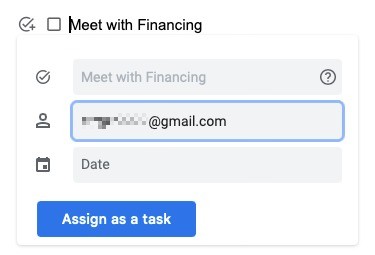
During the meeting, add notes under the relevant agenda items and use suitable action or decision controls where available. Include enough wording to explain what was agreed and who will do the work. Keep unresolved questions visibly separate. Afterward, review the record and update task completion through the established process. The next meeting can then begin with a trustworthy view of remaining actions and a fresh agenda. Consistency comes from clear relationships between records, decisions and tasks, not from repeating the same template text regardless of what the team actually discussed.
Keep the recurring meeting purpose visible and current
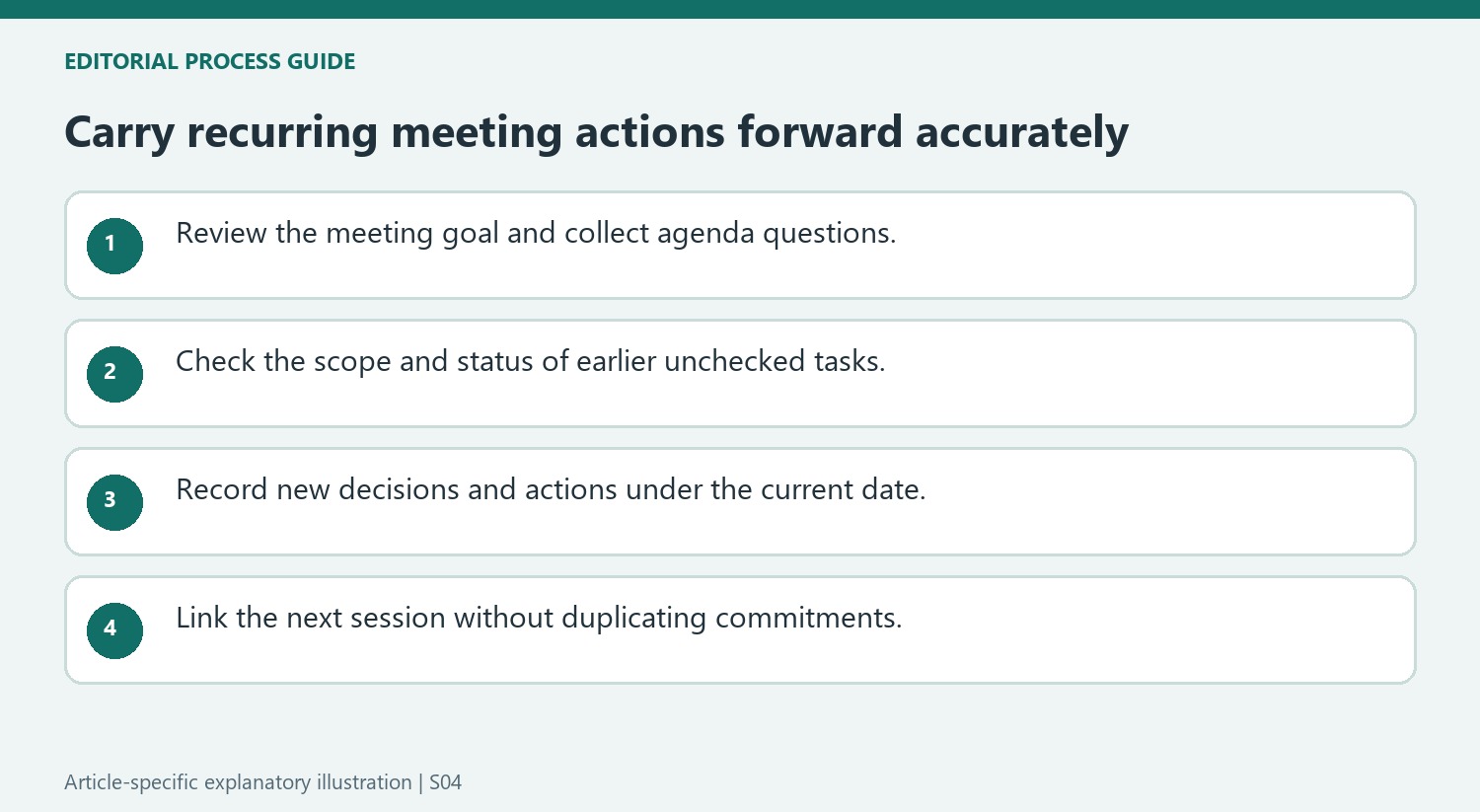
A recurring time slot does not guarantee that the original purpose still fits the team's work. Review the stated goal, key participants and meeting process as responsibilities change. Ask for agenda contributions before the session so discussion reflects current needs. Distinguish topics that require a decision from information that participants can read without consuming meeting time.
The source places a meeting overview above the dated notes. Use that stable introduction to explain how the session works, while keeping each week's discussion under its own date. Verify the attendee list for the actual session instead of copying the regular invitation list blindly. This makes later decisions easier to interpret when someone important was absent or a substitute joined the conversation.
Inspect the task report before treating it as an agenda
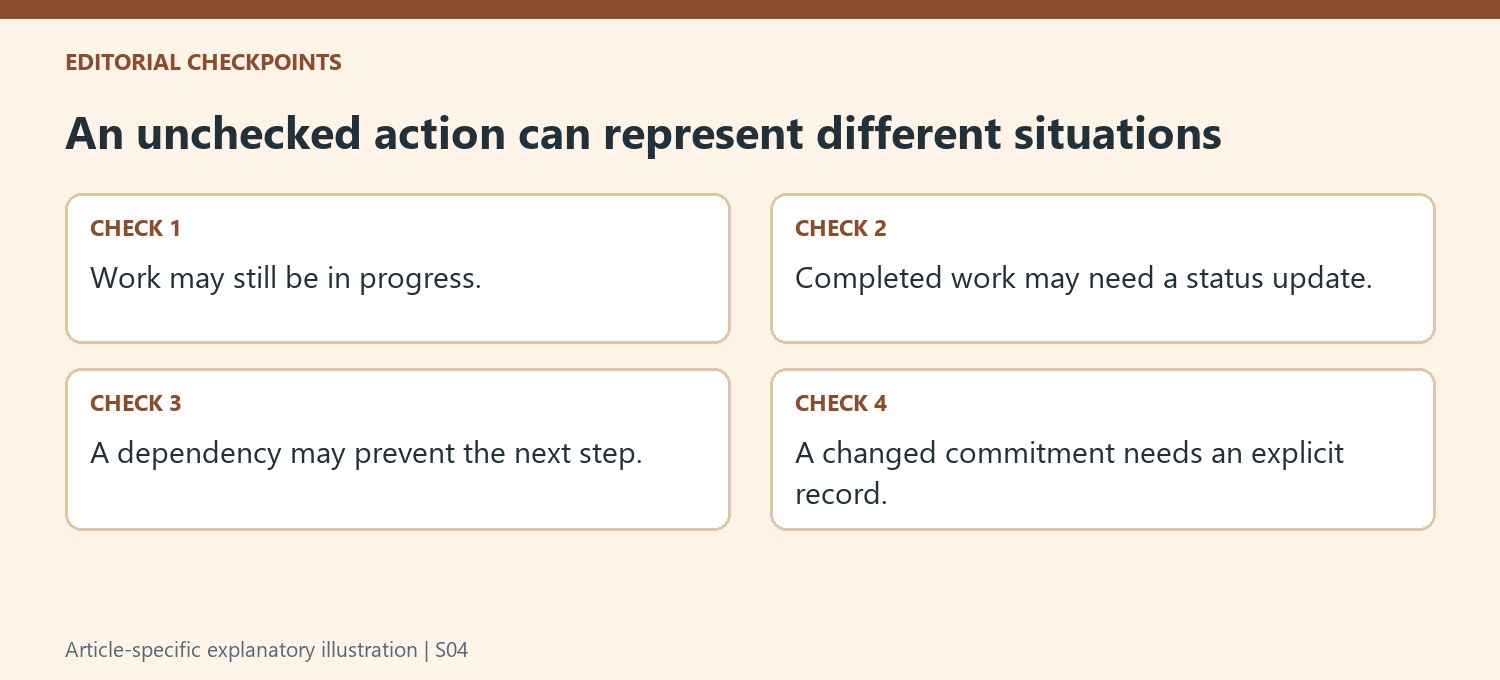
The described task-report macro gathers unchecked actions from prior notes. Review its scope and the underlying entries before assuming it is a complete account of unfinished work. A task can remain unchecked because nobody updated the page even though the work is done. Another may depend on information that is still unavailable. Clarifying those differences avoids spending each session repeating stale reminders.
Check off completed work in the appropriate source location and preserve the original action relationship. If the team changes a deadline or deliverable, record that change explicitly rather than creating an indistinguishable second commitment. A useful review asks what changed, what blocks progress and what decision is now needed. It should not reward a growing list of duplicate actions that obscures responsibility.
Separate continuity from the record of the new session
Use the current agenda to capture fresh discussion, decisions and action items under the correct session date. Keep unresolved questions visibly unresolved, and assign an owner where further investigation is needed. At the close, confirm which earlier commitments continue and which new ones were agreed. Prepare a new dated session while retaining links to the previous record. This provides continuity without rewriting history, allowing a later reader to follow how an open question became a decision and how the resulting work moved toward completion across several meetings.
References
- Weekly meeting notes template | Confluence. Atlassian.



Comments
0