 DocumentFlow Desk
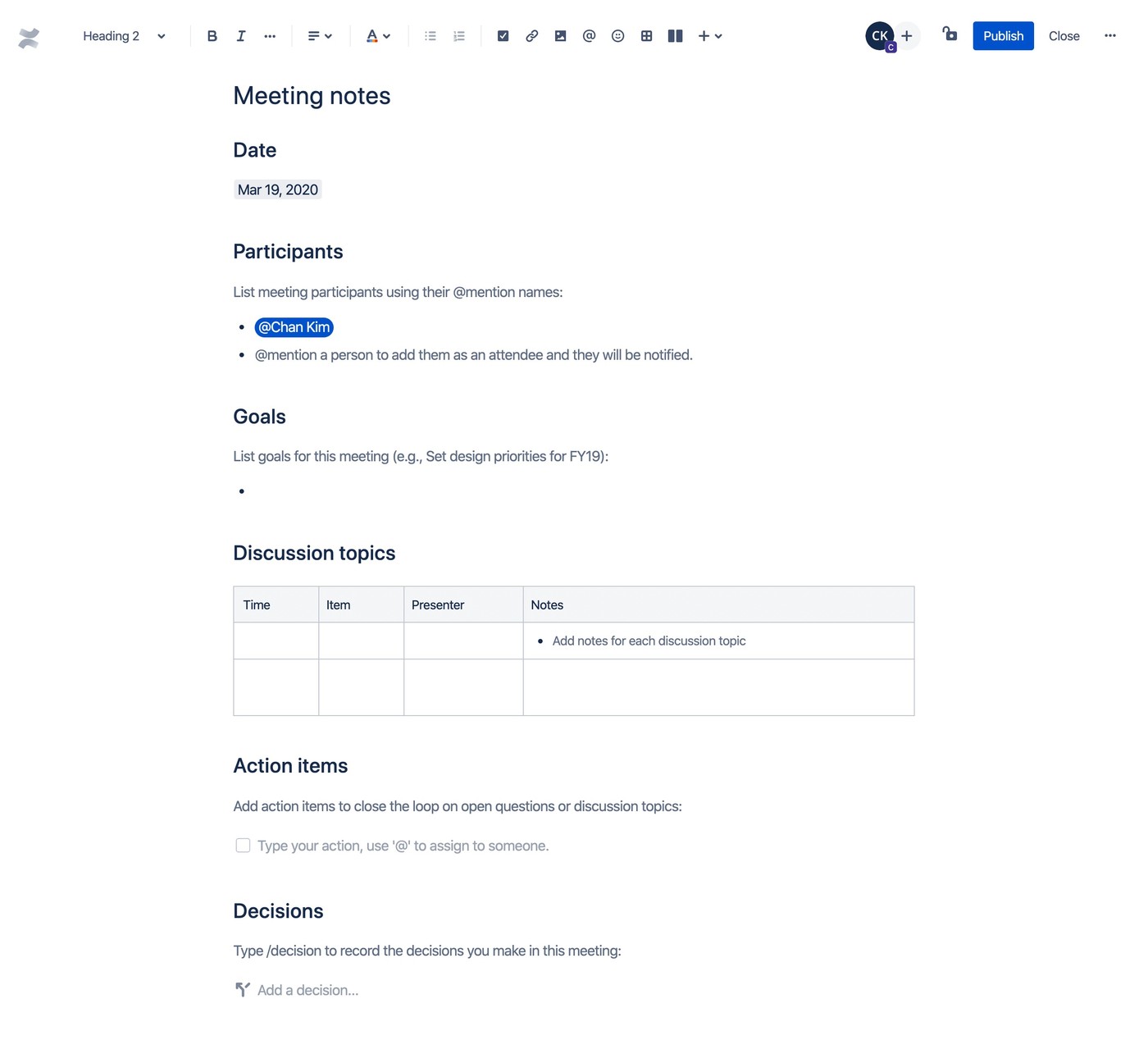
Establish the meeting context before taking notes
Atlassian's template guidance includes the date, time, attendees and agenda as the foundation for a reliable meeting record. Add those details before the discussion where possible, and link the relevant preparation material. State the meeting's purpose clearly so a later reader understands the context of the decisions. A recurring template provides consistency, but it should not force unrelated information into every session. Keep the agenda tied to the questions the group actually needs to resolve, making the resulting record easier to scan and compare with earlier meetings.
Separate discussion summaries from confirmed decisions
Record enough of each discussion to explain the outcome without attempting to reproduce every sentence. Identify decisions explicitly and include the important reasoning or constraints when they will matter later. A proposed idea is not an agreed decision merely because it appears in the notes. Check uncertain wording before circulating the record. This distinction helps absent participants understand what the group committed to and prevents a later reader from treating an unresolved possibility as a settled direction. Keep the language concrete and connected to the agenda topic that produced the outcome.
Make action items traceable after the session
The source emphasizes a specific owner and due date for each follow-up task. Describe the deliverable clearly enough that completion can be recognized, rather than recording only a broad intention such as investigate or discuss. Review open actions at the next relevant meeting and update their status through the team's chosen workflow. Share the minutes where intended participants can find them, including those who missed the session. A consistent archive supports future decisions only when the entries remain understandable, accessible and clear about what was assigned versus what has actually been completed.
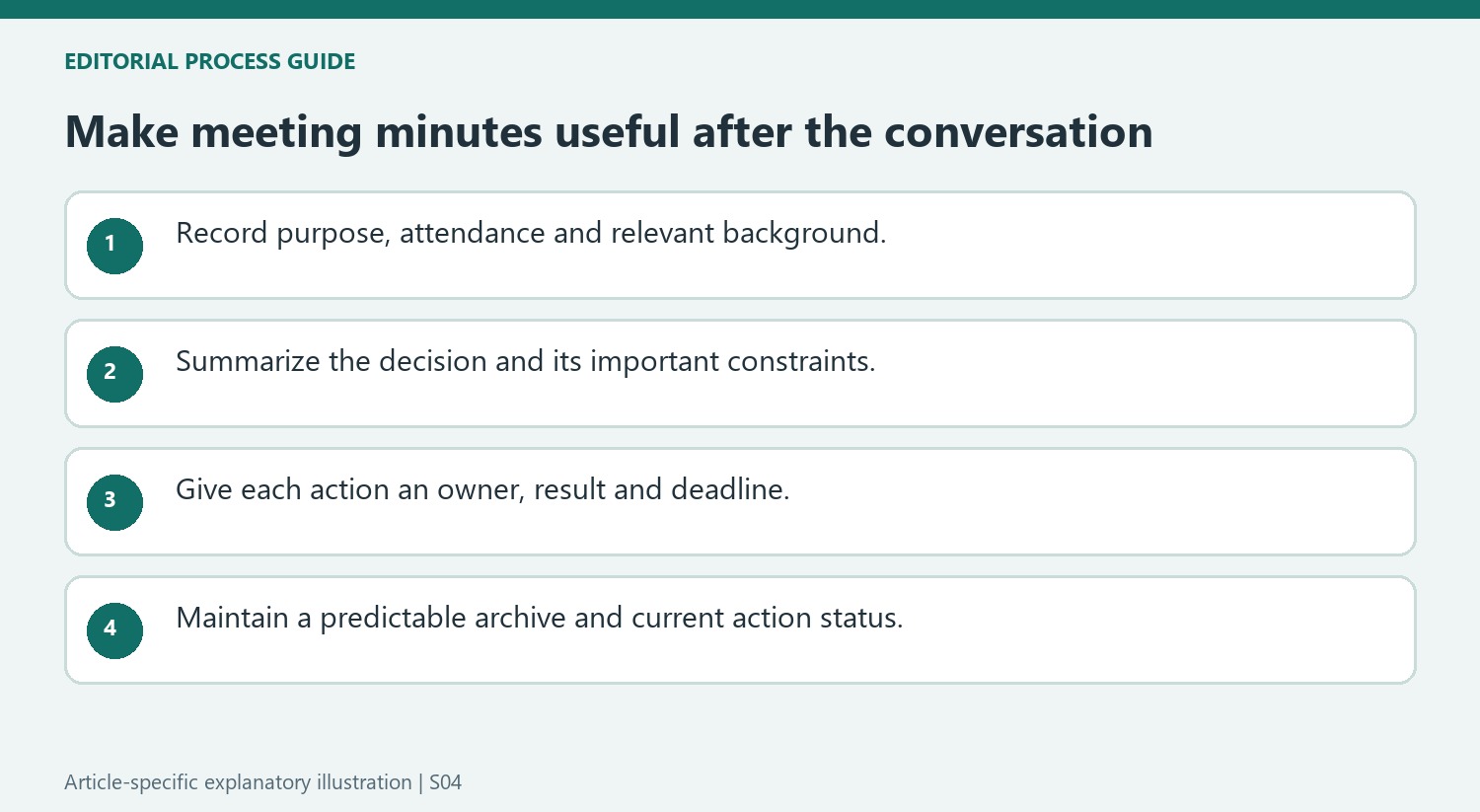
Decide what readers need to understand after the meeting
A useful record explains the purpose of the gathering and the background needed to interpret its outcomes. Link relevant preparation material and earlier minutes where those documents clarify an unresolved question. Keep the meeting date and attendance accurate. Someone reading later should be able to distinguish people who attended from people assigned work or consulted after the discussion.
Discussion summaries should capture the reason a decision took its final shape without reproducing every contribution. Record an important constraint or dependency alongside the outcome so a future team does not need to reconstruct it from memory. When the group deferred a decision, state that status plainly and identify what information or authority is still needed before it can be settled.
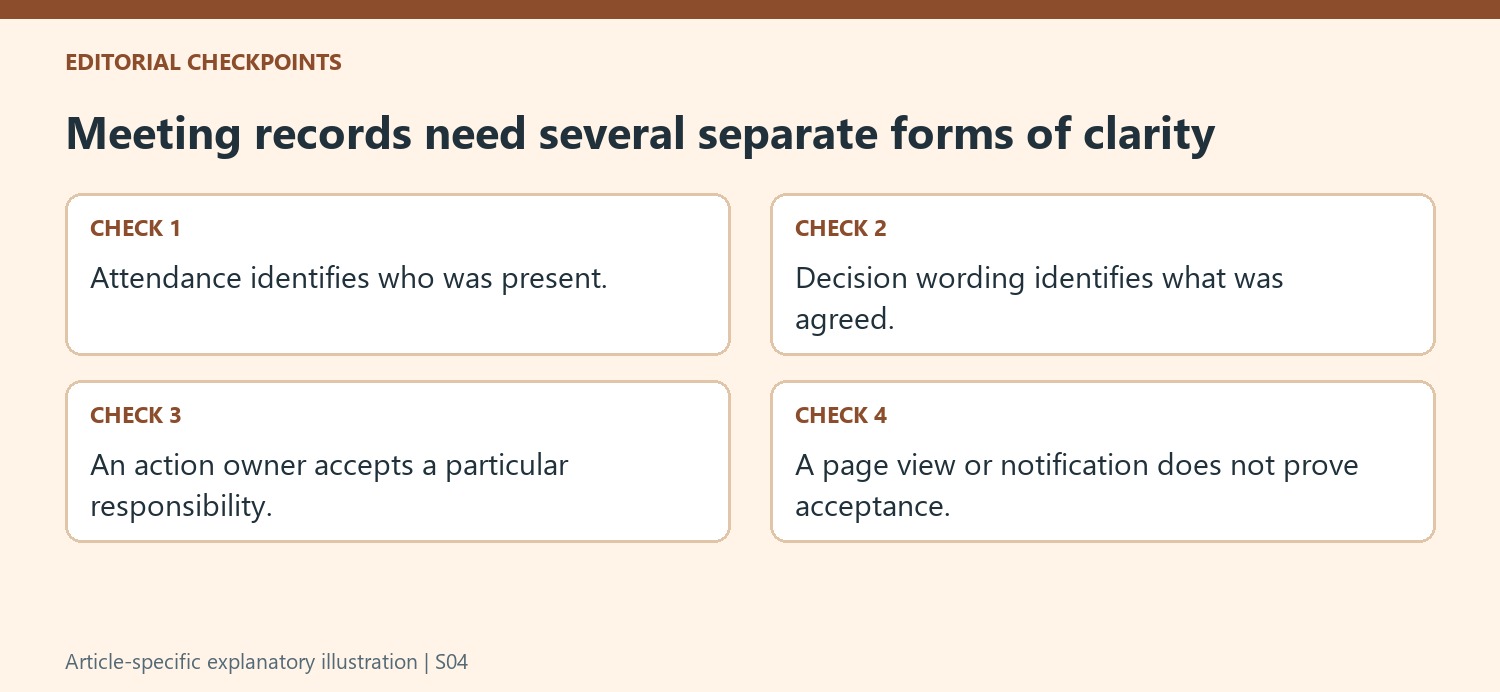
Give actions enough detail to support a real handover
Name the owner and expected result of each action instead of leaving a broad instruction such as follow up. Include the agreed deadline and any dependency mentioned during the meeting. Read back the action before closing when ownership or timing is ambiguous. A person's presence in the attendee list does not establish acceptance of every task discussed in the same document.
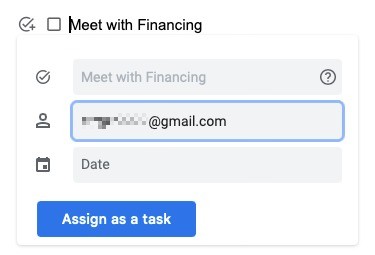
The source describes collaborative notes and people mentions within Confluence. These can direct attention to the record, but a notification or a page view is not evidence that the recipient understood or accepted an assignment. Keep the record itself explicit. Update progress in a consistent place so a later reader can tell whether an action remains open or was completed after the minutes were first circulated.
Organize the archive around retrieval and continuity
Choose a predictable location and naming pattern, such as project and date, and use it consistently for related meetings. Connect a new set of minutes to relevant previous outcomes without copying obsolete statements as current decisions. Review the final record for missing owners, conflicting dates and unexplained abbreviations. The source recommends closing with takeaways and next steps; use that moment to resolve gaps while participants can still clarify them. A concise, well-linked archive makes the reasoning and commitments easier to retrieve long after the conversation itself has ended.



Comments
0