 DocumentFlow Desk
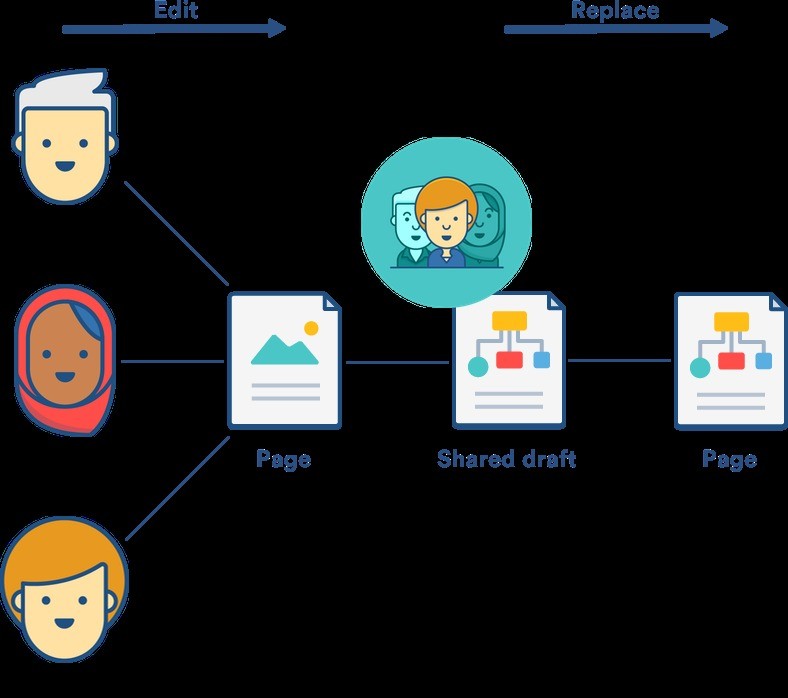
Recognize how shared drafts change the content model
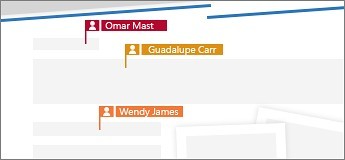
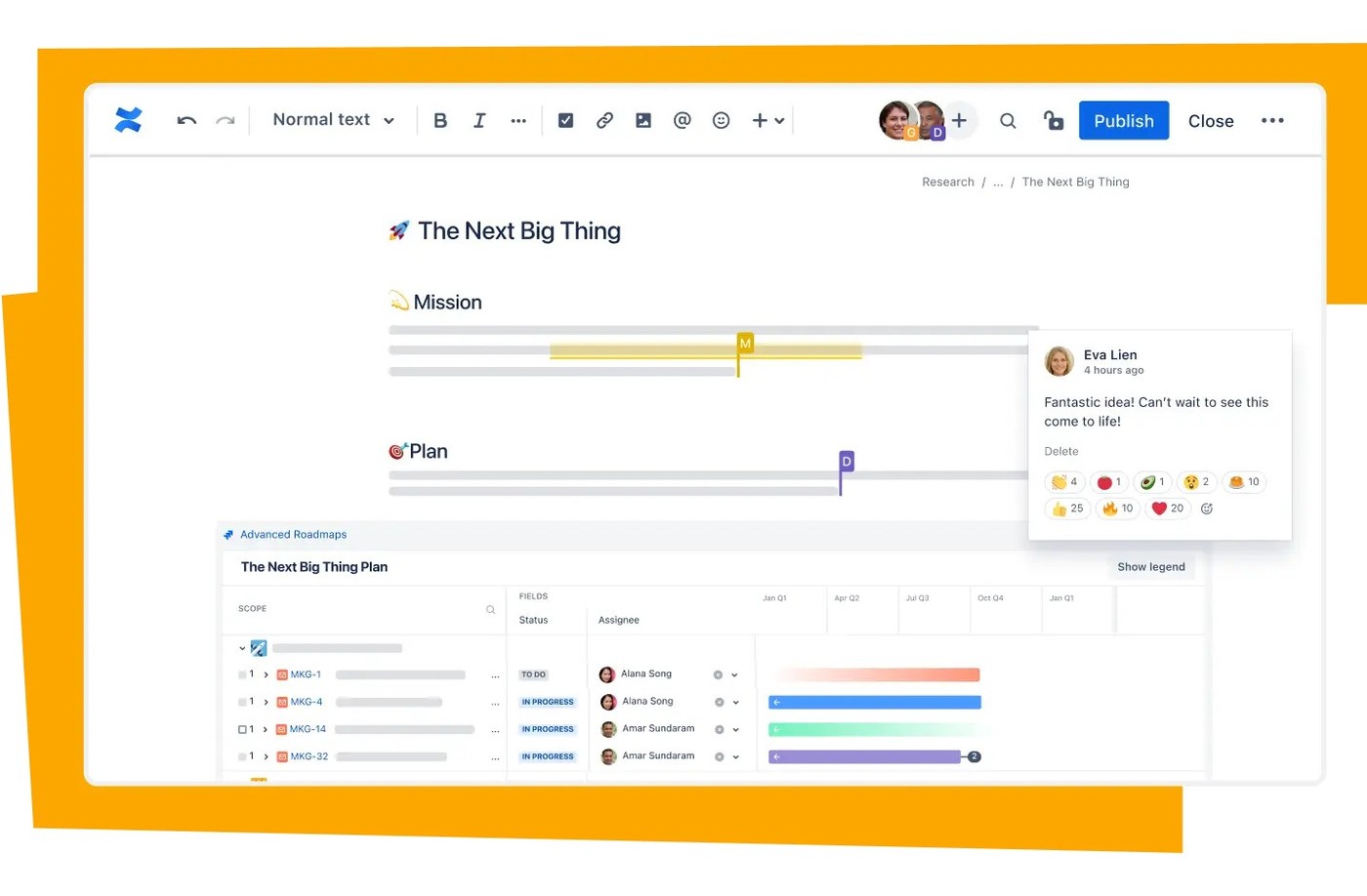
Atlassian's developer page explains collaborative editing as several people working on one page while seeing each other's presence and changes. It also describes a transition from personal drafts to shared drafts. In the documented model, a draft is represented through page or blog-post content with draft status, rather than relying only on the older dedicated draft representation. This distinction matters to integrations that read, create or publish content. Treat the page as version-specific developer guidance and verify the supported model in the target Confluence environment before applying its examples.
Address the draft state explicitly in API operations
The source describes using a draft-status query when fetching the shared draft corresponding to a content identifier. Publishing changes the status to current in the documented request. It also discusses an abort conflict policy, under which a publish operation fails rather than silently proceeding through a conflict. An integration should inspect the result and handle that failure instead of assuming that a submitted request always published the intended state. The Java service examples likewise distinguish content creation, draft retrieval and publication, showing why those operations need separate handling in an application.
Account for lifecycle, access and compatibility
The guidance lists draft-created and draft-updated events as integration points, including a client-side save event. It also explains that unpublished shared drafts require identifying information and a share identifier in the described access workflow. Published pages and their associated drafts have different navigation behavior from drafts that have never been published. Older personal drafts can remain available for reading and copying without resuming the same editing experience. Check lifecycle behavior, permissions and supported APIs together when maintaining an integration, so a change in draft representation does not become an unnoticed loss of compatibility or an incorrect assumption about what users can access.
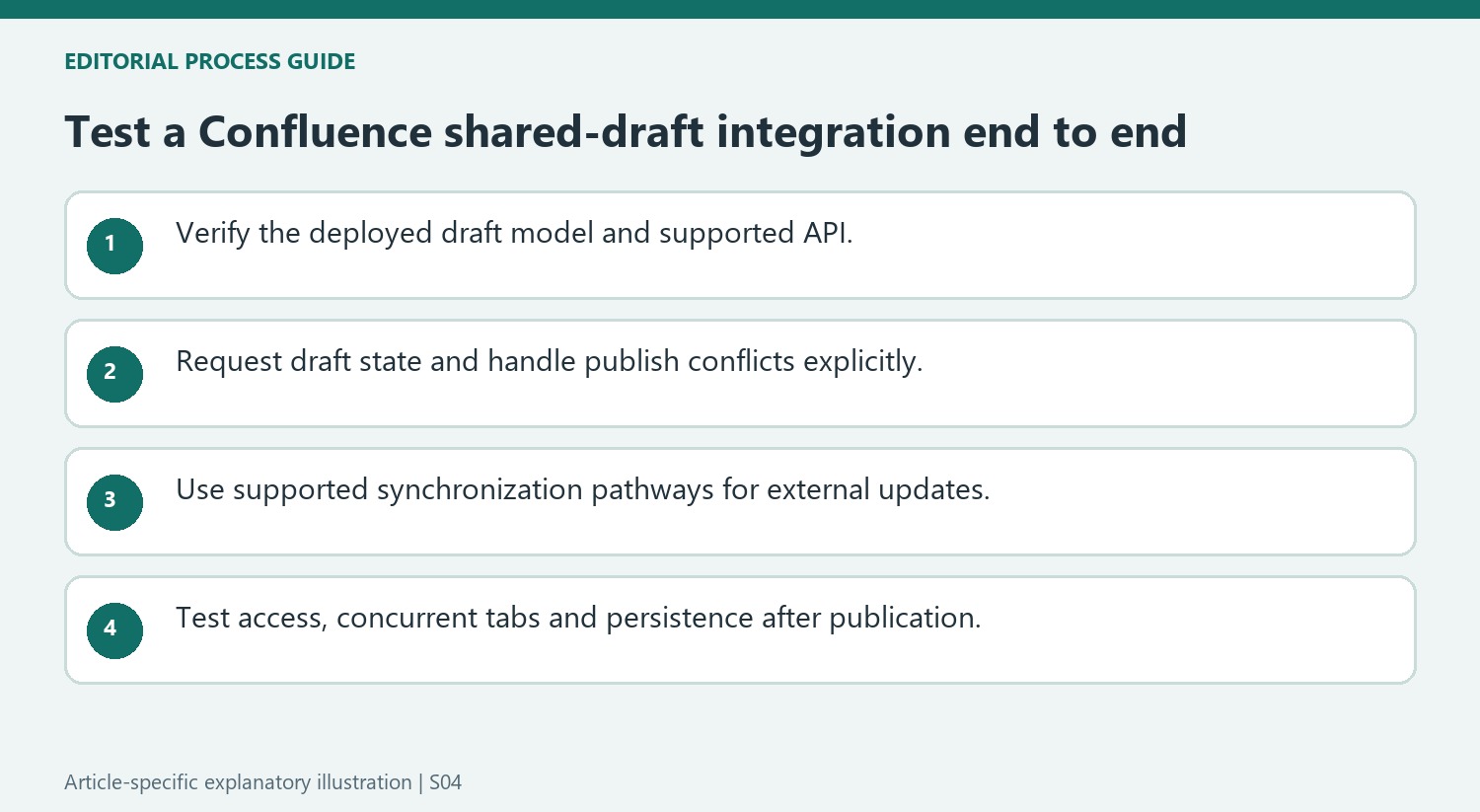
Treat draft representation and publication as separate operations
The guidance describes shared drafts as page or blog-post content with draft status, distinct from the older personal-draft representation. An integration needs to request the intended status explicitly rather than assuming a content identifier always returns the live editor state. Verify the target Confluence version and supported API before adopting the examples, since this is developer guidance tied to a particular collaboration model.
The documented REST route uses status=draft for the shared draft and a current status in the publish payload. The abort conflict policy returns failure when a conflict occurs. Handle that result explicitly and leave the user with a truthful publication state. A completed request submission is not proof that the intended content became current, especially when the workflow permits other concurrent editing.
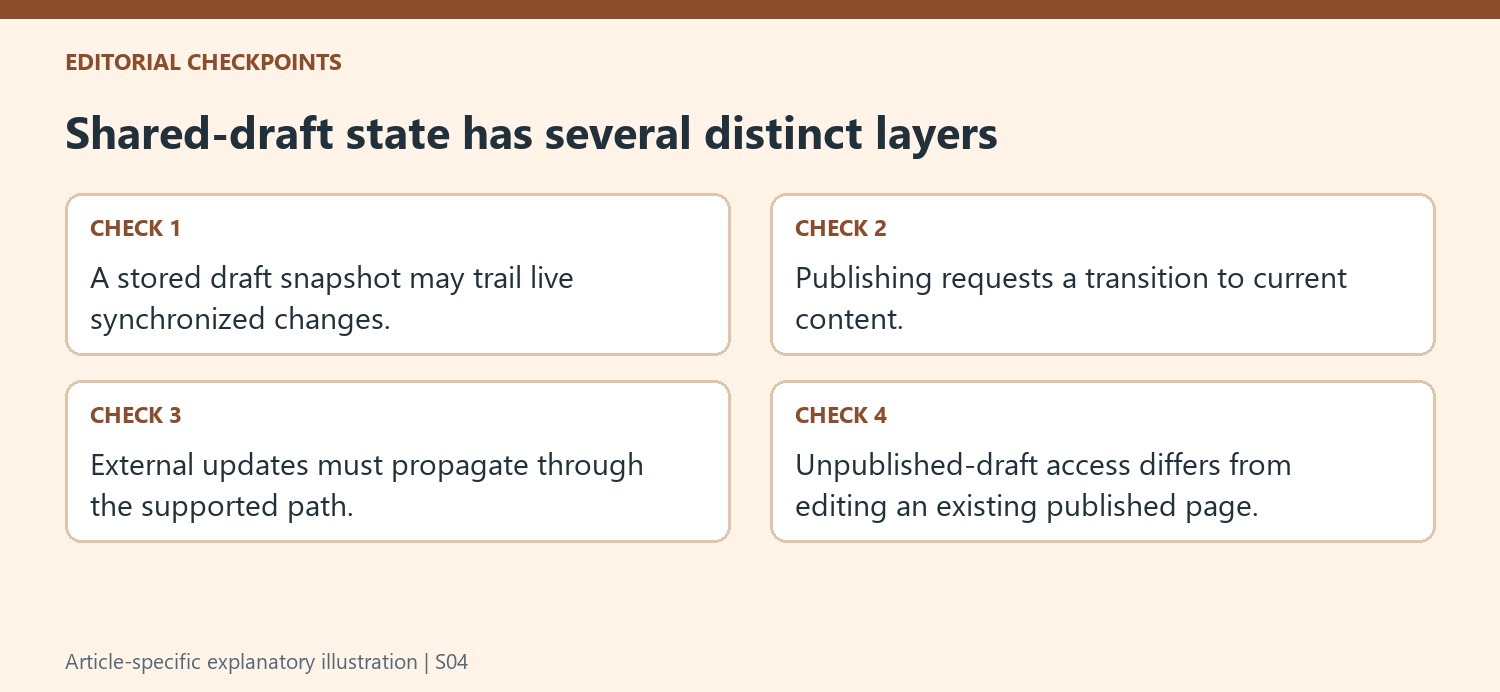
Respect synchronization boundaries when changing page content
The source explains that Synchrony can hold changes not yet persisted in the shared draft snapshot. Reading the stored draft body therefore should not be assumed to retrieve the latest live editor content in every moment. Use the supported integration pathway for the deployed environment and avoid building a workflow around an undocumented timing assumption about those periodic saves.
For external changes, the guidance warns against direct draft-object modification and bypassing the page-management path that propagates updates. Such shortcuts can leave edits unsynchronized or cause them to be lost on a later publish. Test an external change with two editor tabs and publish again afterward, as the source recommends, to verify that the change survives the real collaboration lifecycle rather than only one isolated service call.
Test access and lifecycle behavior with realistic draft states
An unpublished shared draft uses identifying and sharing information in the described access flow, subject to its view and edit restrictions. A draft linked to a published page follows a different navigation route. Check both cases, along with creation, update events, location persistence and older personal-draft compatibility. The source also describes draft-version restrictions and draft indexing differences. Verify those assumptions in the target deployment before releasing an integration. A useful compatibility test follows content from initial creation through concurrent work, publication and later external updates, keeping permissions and synchronization behavior visible at every stage.
References
- Collaborative editing. developer.atlassian.com.


Comments
0